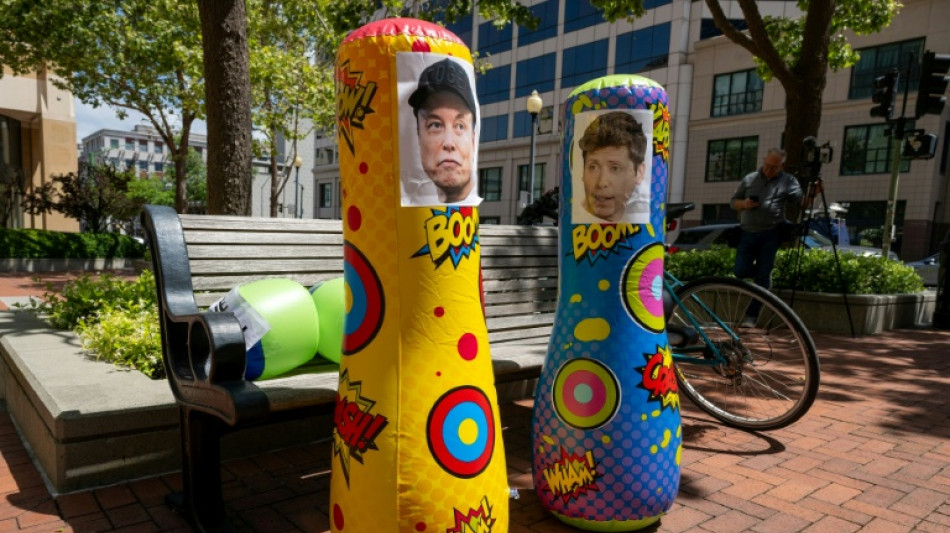
Anxiety, resentment around AI spur violence against tech's figureheads / Photo: Karl Mondon - AFP

 London
 17 °C
17 °C
 Manchester
 14 °C
14 °C
 Glasgow
 15 °C
15 °C
 Dublin
 15 °C
15 °C
 Belfast
13 °C
Belfast
13 °C
 Washington
 16 °C
16 °C
 Denver
 17 °C
17 °C
 Atlanta
 14 °C
14 °C
 Dallas
24 °C
Dallas
24 °C
 Houston Texas
 25 °C
25 °C
 New Orleans
24 °C
New Orleans
24 °C
 El Paso
22 °C
El Paso
22 °C
 Phoenix
29 °C
Phoenix
29 °C
 Los Angeles
22 °C
San Diego
23 °C
San Francisco
14 °C
Chicago
13 °C
Minneapolis
15 °C
Seattle
10 °C
Portland
12 °C
Salt Lake City
21 °C
Las Vegas
26 °C
Miami
24 °C
Jacksonville
17 °C
San Antonio
24 °C
Bermuda
23 °C
Nassau
15 °C
Iqaluit
Los Angeles
22 °C
San Diego
23 °C
San Francisco
14 °C
Chicago
13 °C
Minneapolis
15 °C
Seattle
10 °C
Portland
12 °C
Salt Lake City
21 °C
Las Vegas
26 °C
Miami
24 °C
Jacksonville
17 °C
San Antonio
24 °C
Bermuda
23 °C
Nassau
15 °C
Iqaluit
 2 °C
Yellowknife
3 °C
Anchorage
9 °C
Fairbanks
5 °C
Barrow
1 °C
Calgary
1 °C
Edmonton
9 °C
Winnipeg
15 °C
Goose Bay
14 °C
Halifax
15 °C
Boston
14 °C
Ottawa
14 °C
Toronto
14 °C
Detroit
12 °C
Cleveland
12 °C
New York
15 °C
Baltimore
16 °C
Philadelphia
14 °C
Nuuk (Godthåb)
-1 °C
Hong Kong
31 °C
Singapore
26 °C
Melbourne
20 °C
Canberra
11 °C
Adelaide
17 °C
Darwin
31 °C
Perth
19 °C
Fort Worth
24 °C
Honolulu
26 °C
Sydney
14 °C
Johannesburg
22 °C
Dubai
2 °C
Yellowknife
3 °C
Anchorage
9 °C
Fairbanks
5 °C
Barrow
1 °C
Calgary
1 °C
Edmonton
9 °C
Winnipeg
15 °C
Goose Bay
14 °C
Halifax
15 °C
Boston
14 °C
Ottawa
14 °C
Toronto
14 °C
Detroit
12 °C
Cleveland
12 °C
New York
15 °C
Baltimore
16 °C
Philadelphia
14 °C
Nuuk (Godthåb)
-1 °C
Hong Kong
31 °C
Singapore
26 °C
Melbourne
20 °C
Canberra
11 °C
Adelaide
17 °C
Darwin
31 °C
Perth
19 °C
Fort Worth
24 °C
Honolulu
26 °C
Sydney
14 °C
Johannesburg
22 °C
Dubai
 37 °C
Mumbai
32 °C
Zürich
18 °C
Tokyo
23 °C
Seoul
26 °C
Delhi
30 °C
Beijing
27 °C
Riyadh
41 °C
Prague
17 °C
Pennsylvania
17 °C
Valletta
24 °C
Manama
37 °C
Warsaw
17 °C
Stockholm
10 °C
37 °C
Mumbai
32 °C
Zürich
18 °C
Tokyo
23 °C
Seoul
26 °C
Delhi
30 °C
Beijing
27 °C
Riyadh
41 °C
Prague
17 °C
Pennsylvania
17 °C
Valletta
24 °C
Manama
37 °C
Warsaw
17 °C
Stockholm
10 °C
Several proponents of artificial intelligence (AI) have become the victims of violent acts in recent days, reflecting the existential dread around the emerging technology -- and the public's growing resentment towards its advocates.
Billionaire OpenAI CEO Sam Altman is among the most prominent, with someone throwing a Molotov cocktail at his home on April 10. A suspect, 20-year-old Daniel Moreno-Gama, has been arrested.
But the violence extends beyond Silicon Valley's elite to include local policymakers, like Ron Gibson, a city councilmember in Indianapolis who had 13 bullets shot through his front door after expressing support for a data center construction project.
Those behind the April 6 attack also left a note reading "No Data Centers."
"Anxiety about emerging technologies is nothing new," said researcher Nirit Weiss-Blatt, whose Substack newsletter "AI Panic" covers the growing hostility towards artificial intelligence.
"With Artificial Intelligence, though, it feels more extreme," she added, noting that Moreno-Gama was radicalized through the "'AI existential risk' rhetoric" rather than its employment or environmental impacts.
"We need to have a broader discussion about how the 'extinction risk' rhetoric radicalizes the most vulnerable individuals," Weiss-Blatt said.
"The fact that some edges justify violent acts is very troubling, and it needs to be condemned as strongly as possible."
The attacks against AI figureheads have no demonstrable ties to one another, nor do they claim affiliation with any shared organization.
But Mauro Lubrano, a lecturer in International Relations at the University of Bath, said calling such actors lone wolves "is actually not that accurate, because these groups are embedded in some sort of digital ecosystem."
Lubrano connects the recent string of violence to the vandalism of Tesla vehicles and dealerships in 2025 in response to founder Elon Musk's work with the administration of US President Donald Trump.
The recent reports of violence have led to an increased demand for physical protection among tech companies.
"In recent months, we've definitely seen a clear uptick," said Rory Moran, who oversees executive security at United Security, Inc.
"These AI and technology companies, especially the big ones, they're always in the news, and when that happens... we're going to see an uptick in interest in potential attacks," he added.
- 'Violence will not help' -
The response to the violence on the Internet has been less panicked.
Many commentators on platforms like TikTok have downplayed or justified the attacks, comparing those involved to Luigi Mangione, the suspect behind the murder of UnitedHealthcare CEO Brian Thompson in 2024.
But some organizations advocating for limiting AI expansion, such as Pause AI and Stop AI, now worry they will be associated with endorsing violent acts against AI proponents.
Dean Ball, a former AI policy advisor for the Trump administration, wrote in a post on X: "The rhetoric of the pause/stop crowd is out of control and it has gotten worse with time."
"This rhetoric always had the potential to cause violence and now this seems to be no longer hypothetical," he added.
Valerie Sizemore, one of the cofounders of Stop AI, said Moreno-Gama -- the Molotov cocktail suspect -- posted on Stop AI's Discord server to ask if he could discuss violence against AI founders.
The server's moderators said posting about such subject matter would get him banned, and he never returned.
"Violence will not help," Sizemore said, instead urging people concerned about AI to opt for "non-violent actions."
"It is really my hope that this is the icebreaking moment that leads everyone to listen to the public and start trying to have the conversation we need to have," she said.
I.Altadonna--INP