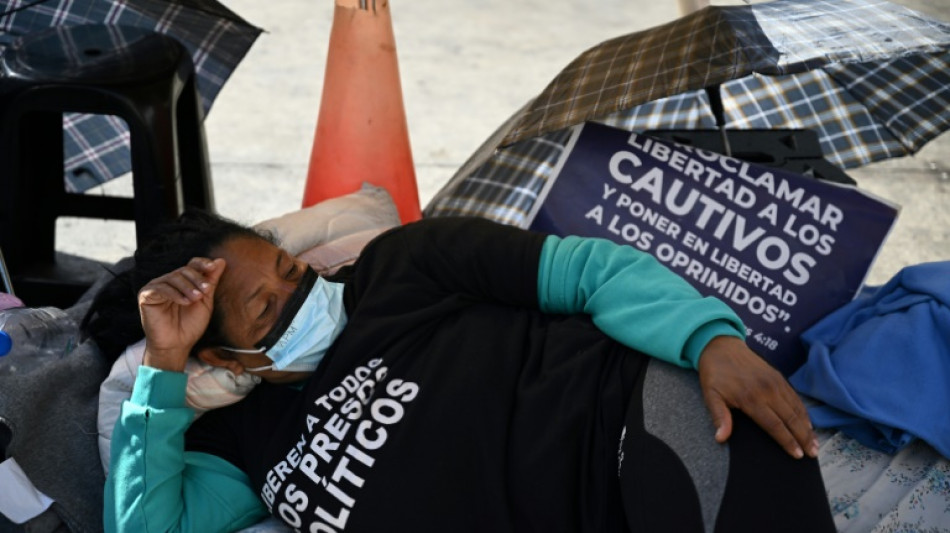
'How long?': Day Three of hunger strike for Venezuelan political prisoners' release / Photo: Federico PARRA - AFP

 London
 15 °C
15 °C

 Manchester
 13 °C
13 °C
 Glasgow
 13 °C
13 °C
 Dublin
 13 °C
13 °C
 Belfast
13 °C
Belfast
13 °C
 Washington
 12 °C
12 °C
 Denver
 15 °C
15 °C
 Atlanta
16 °C
Atlanta
16 °C
 Dallas
24 °C
Dallas
24 °C
 Houston Texas
26 °C
Houston Texas
26 °C
 New Orleans
26 °C
New Orleans
26 °C
 El Paso
 19 °C
19 °C
 Phoenix
24 °C
Phoenix
24 °C
 Los Angeles
 20 °C
San Diego
20 °C
San Francisco
16 °C
Chicago
16 °C
Minneapolis
15 °C
Seattle
13 °C
Portland
15 °C
Salt Lake City
17 °C
Las Vegas
26 °C
Miami
25 °C
Jacksonville
19 °C
San Antonio
26 °C
Bermuda
28 °C
Nassau
14 °C
Iqaluit
2 °C
Yellowknife
5 °C
Anchorage
7 °C
Fairbanks
2 °C
Barrow
-2 °C
Calgary
11 °C
Edmonton
14 °C
Winnipeg
15 °C
Goose Bay
6 °C
Halifax
13 °C
Boston
10 °C
Ottawa
8 °C
Toronto
9 °C
Detroit
10 °C
Cleveland
10 °C
New York
14 °C
Baltimore
13 °C
Philadelphia
14 °C
Nuuk (Godthåb)
1 °C
Hong Kong
32 °C
Singapore
31 °C
Melbourne
24 °C
Canberra
20 °C
Adelaide
20 °C
Darwin
31 °C
Perth
20 °C
Fort Worth
25 °C
Honolulu
26 °C
Sydney
22 °C
Johannesburg
21 °C
Dubai
37 °C
Mumbai
31 °C
Zürich
14 °C
Tokyo
25 °C
Seoul
20 °C
Delhi
32 °C
Beijing
25 °C
Riyadh
40 °C
Prague
20 °C
San Diego
20 °C
San Francisco
16 °C
Chicago
16 °C
Minneapolis
15 °C
Seattle
13 °C
Portland
15 °C
Salt Lake City
17 °C
Las Vegas
26 °C
Miami
25 °C
Jacksonville
19 °C
San Antonio
26 °C
Bermuda
28 °C
Nassau
14 °C
Iqaluit
2 °C
Yellowknife
5 °C
Anchorage
7 °C
Fairbanks
2 °C
Barrow
-2 °C
Calgary
11 °C
Edmonton
14 °C
Winnipeg
15 °C
Goose Bay
6 °C
Halifax
13 °C
Boston
10 °C
Ottawa
8 °C
Toronto
9 °C
Detroit
10 °C
Cleveland
10 °C
New York
14 °C
Baltimore
13 °C
Philadelphia
14 °C
Nuuk (Godthåb)
1 °C
Hong Kong
32 °C
Singapore
31 °C
Melbourne
24 °C
Canberra
20 °C
Adelaide
20 °C
Darwin
31 °C
Perth
20 °C
Fort Worth
25 °C
Honolulu
26 °C
Sydney
22 °C
Johannesburg
21 °C
Dubai
37 °C
Mumbai
31 °C
Zürich
14 °C
Tokyo
25 °C
Seoul
20 °C
Delhi
32 °C
Beijing
25 °C
Riyadh
40 °C
Prague
 14 °C
Pennsylvania
8 °C
Valletta
24 °C
Manama
36 °C
Warsaw
14 °C
Stockholm
13 °C
14 °C
Pennsylvania
8 °C
Valletta
24 °C
Manama
36 °C
Warsaw
14 °C
Stockholm
13 °C
With dark circles under their eyes and feeling weak but angry, about a dozen female relatives of Venezuelan political prisoners staged day three of a hunger strike Monday demanding their loved ones' immediate release.
Reclining on mattresses outside the "Zona 7" prison in Caracas, some are starting to doubt if the interim regime left over after Nicolas Maduro's ouster in a US military strike last month intends to keep its word on freeing hundreds of government detractors.
Inside Zona 7, about 60 inmates remain, along with hundreds more countrywide for whose release family members have been clamoring for weeks.
The Foro Penal rights NGO says 444 political prisoners have been freed since Maduro's toppling. More than 600 remain behind bars.
"How long? How long are they going to leave us like this?" asked Evelin Quiaro, 46, lying feebly on her back with a small bottle of electrolyte water within reach. She hadn't eaten solid food in over two days.
Quiaro's son has been imprisoned since November, accused of taking part in a bomb attack Maduro's security services claim to have foiled.
He is one of hundreds, perhaps thousands, Venezuelans jailed in recent years over plots, real or imagined, to overthrow the regime.
Five days after Maduro's toppling on January 3, an interim government led by Delcy Rodriguez -- formerly his vice president -- vowed under pressure from Washington to free all political prisoners.
But Rodriguez and the rest of what remains of the regime are staunch Maduro acolytes, and some Venezuelans distrust their intentions.
"We’ve been here for a very long time, since January 8 for most of us, sleeping under tents, living here in an inhuman way. We’re at our limit," Quiaro told AFP.
Venezuela's congress is considering a law that is meant to grant amnesty to political detainees, but several postponements -- the most recent last Thursday -- prompted the hunger strike.
- 'This is not a game!' -
Rafael Arreaza, a prominent Venezuelan doctor volunteering help to the "Zona 7" families, says fasting is dangerous, especially in the kinds of conditions in which the hunger strikers find themselves: out in the open, breathing in dust and pollution.
"Immunity drops and health complications can occur very easily," he told AFP.
Quiaro said she was, indeed, already starting to feel weak.
But, she added: "It’s worth it, it will always be worth it! This has to have an effect. This is not a game!"
Another of the protesters, Narwin Gil, stopped a policeman from entering the prison with his lunchbox.
"You can’t go in with food. If they (the prisoners) aren’t eating, neither are you,” she shouted. The officer did not insist, and turned back.
The doctor, Arreaza, said he had been denied permission to go inside to check on the prisoners, and it was not clear whether any of them were also on hunger strike.
Maria Escalona, 41, whose husband has been detained since September, also spoke from a mattress outside the prison.
"My little ones (eight and nine) are suffering because they’re not with their father. It’s stressful, it’s worrying. We’re already exhausted by this hunger strike," she said.
Congress is not due to sit again before Thursday, and it is not known when the amnesty bill will next come up for discussion.
M.Dodaro--INP