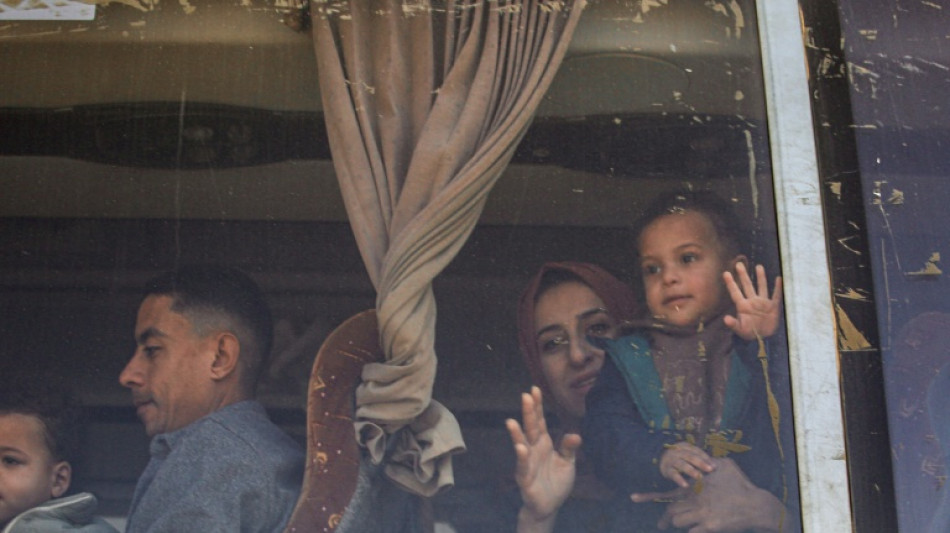
Gaza's Rafah crossing makes limited reopening after two-year war / Photo: Bashar Taleb - AFP

 London
 13 °C
13 °C

 Manchester
 15 °C
15 °C
 Glasgow
12 °C
Glasgow
12 °C
 Dublin
14 °C
Dublin
14 °C
 Belfast
 14 °C
14 °C
 Washington
14 °C
Washington
14 °C
 Denver
19 °C
Denver
19 °C
 Atlanta
18 °C
Atlanta
18 °C
 Dallas
32 °C
Dallas
32 °C
 Houston Texas
33 °C
Houston Texas
33 °C
 New Orleans
 30 °C
30 °C
 El Paso
23 °C
El Paso
23 °C
 Phoenix
 28 °C
28 °C
 Los Angeles
 25 °C
San Diego
25 °C
San Francisco
19 °C
Chicago
18 °C
Minneapolis
16 °C
Seattle
15 °C
Portland
21 °C
Salt Lake City
25 °C
Las Vegas
34 °C
Miami
28 °C
Jacksonville
22 °C
San Antonio
25 °C
San Diego
25 °C
San Francisco
19 °C
Chicago
18 °C
Minneapolis
16 °C
Seattle
15 °C
Portland
21 °C
Salt Lake City
25 °C
Las Vegas
34 °C
Miami
28 °C
Jacksonville
22 °C
San Antonio
 33 °C
Bermuda
28 °C
Nassau
16 °C
Iqaluit
4 °C
Yellowknife
9 °C
Anchorage
12 °C
Fairbanks
10 °C
Barrow
-1 °C
Calgary
18 °C
Edmonton
19 °C
Winnipeg
17 °C
Goose Bay
13 °C
Halifax
12 °C
Boston
12 °C
Ottawa
12 °C
Toronto
13 °C
Detroit
15 °C
Cleveland
14 °C
New York
18 °C
Baltimore
16 °C
Philadelphia
15 °C
Nuuk (Godthåb)
2 °C
Hong Kong
30 °C
Singapore
28 °C
Melbourne
26 °C
Canberra
21 °C
Adelaide
21 °C
Darwin
29 °C
Perth
16 °C
Fort Worth
32 °C
Honolulu
28 °C
Sydney
25 °C
Johannesburg
14 °C
Dubai
30 °C
Mumbai
29 °C
Zürich
11 °C
Tokyo
33 °C
Bermuda
28 °C
Nassau
16 °C
Iqaluit
4 °C
Yellowknife
9 °C
Anchorage
12 °C
Fairbanks
10 °C
Barrow
-1 °C
Calgary
18 °C
Edmonton
19 °C
Winnipeg
17 °C
Goose Bay
13 °C
Halifax
12 °C
Boston
12 °C
Ottawa
12 °C
Toronto
13 °C
Detroit
15 °C
Cleveland
14 °C
New York
18 °C
Baltimore
16 °C
Philadelphia
15 °C
Nuuk (Godthåb)
2 °C
Hong Kong
30 °C
Singapore
28 °C
Melbourne
26 °C
Canberra
21 °C
Adelaide
21 °C
Darwin
29 °C
Perth
16 °C
Fort Worth
32 °C
Honolulu
28 °C
Sydney
25 °C
Johannesburg
14 °C
Dubai
30 °C
Mumbai
29 °C
Zürich
11 °C
Tokyo
 25 °C
Seoul
21 °C
Delhi
25 °C
Beijing
20 °C
Riyadh
29 °C
Prague
11 °C
Pennsylvania
13 °C
Valletta
23 °C
Manama
33 °C
Warsaw
11 °C
Stockholm
12 °C
25 °C
Seoul
21 °C
Delhi
25 °C
Beijing
20 °C
Riyadh
29 °C
Prague
11 °C
Pennsylvania
13 °C
Valletta
23 °C
Manama
33 °C
Warsaw
11 °C
Stockholm
12 °C
Gaza's key Rafah border crossing reopened to Palestinians on Monday, an Israeli security official said, though Egyptian state-linked media said only 50 people would be allowed to cross in each direction in the early days.
The resumption of operations comes after Gaza's civil defence reported dozens killed in a wave of Israeli strikes over the weekend, in what the military said was retaliation for Palestinian fighters exiting a tunnel in Rafah city.
The Rafah crossing with Egypt is Gaza's only gateway to the outside world that does not lead to Israel and is a key access point for both people and goods.
Israeli forces seized control of the crossing in May 2024 during the war with Hamas, and it has remained largely closed since.
A partial resumption of operations began on Sunday in a tightly restricted pilot phase that did not involve travel of people, following months of appeals from aid groups.
"As of this time, and following the arrival of the EUBAM teams on behalf of the European Union, the Rafah crossing has now opened to the movement of residents, for both entry and exit," the Israeli official said, referring to a European border assistance mission.
Egyptian state-linked media reported that 50 people were expected to cross in each direction in the first days of the reopening.
AlQahera News, which is linked to Egypt's state intelligence service, reported citing an unnamed source that "fifty people will depart Egypt for Gaza and fifty people will come from Gaza, in the first days of the operation".
A source at the border told AFP a few dozen people arrived on the Egyptian side on Monday awaiting entry into Gaza.
Israeli state broadcaster Kan reported that the crossing would be open for about six hours daily.
"The Rafah crossing is a lifeline," said Mohammed Nassir, a Palestinian who had his leg amputated after being injured early in the war.
"I need to undergo surgery that is unavailable in Gaza but can be performed abroad."
- Hospitals preparing -
Gaza's civil defence agency, which operates as a rescue force under Hamas authority, said Israeli bombings killed 32 people including children in Gaza on Saturday.
Israel's military said the strikes were retaliation for an incident on Friday in which eight Palestinian fighters exited a tunnel in Rafah, which it said violated the fragile US-sponsored ceasefire in effect since October 10.
The EU's top diplomat Kaja Kallas said the opening of the Rafah crossing "marks a concrete and positive step in the peace plan," for the war-battered territory.
"The EU's civilian mission is on the ground to monitor crossing operations and support Palestinian border guards," she wrote online.
An official at Gaza's health ministry, which operates under Hamas authority, said on Sunday about 200 patients were waiting for permission to leave the territory.
The director of Gaza City's Al-Shifa Hospital, Mohammed Abu Salmiya, said there were 20,000 patients in the territory, including 4,500 children, in urgent need of treatment.
Rafah is considered a key entry point into and out of Gaza, where humanitarian conditions remain dire after two years of war.
The crossing had been briefly opened in early 2025 but has been largely shut since it was seized by Israeli forces.
AFP images from Sunday showed ambulances queued up on the Egyptian side preparing to receive medical evacuees, who were expected to be the first groups allowed out.
AlQahera News, citing Egypt's health ministry, reported that 150 hospitals and 300 ambulances had been prepared to receive Palestinian patients.
It said 12,000 doctors and 30 rapid deployment teams had been allocated to work with the transferred Palestinians.
- No aid entry so far -
COGAT, the Israeli defence ministry body coordinating Palestinian civilian affairs, made no mention of allowing in a long-hoped-for surge of aid, speaking only of the passage of individuals "in both directions".
AlQahera News reported that the Egyptian side of the crossing would remain open "round the clock".
Israel had previously tied Rafah's reopening to the return of the remains of Ran Gvili, the last Israeli hostage held in Gaza. His body was recovered and buried last week, prompting Israel to announce the phased reopening.
Rafah lies in an area held by Israeli forces following their withdrawal behind a so-called "Yellow Line" under the terms of the US-brokered ceasefire.
Israeli troops still control more than half of Gaza, while the rest remains under Hamas authority.
The Gaza war was sparked by Hamas's October 7, 2023 attack on Israel, which resulted in the deaths of 1,221 people, according to an AFP tally based on official Israeli figures.
Israel's retaliation left at least 71,795 people dead in Gaza, according to the health ministry in the Hamas-run territory, whose figures the UN considers reliable.
burs-acc/jd/ser
H.Zampino--INP