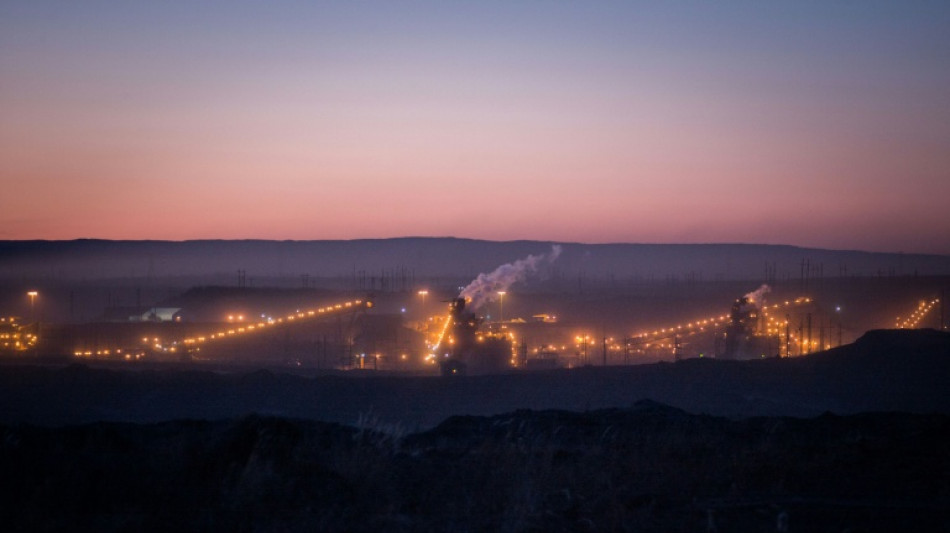
With Trump allies watching, Canada oil hub faces separatist bid / Photo: Ian Willms - GETTY IMAGES NORTH AMERICA/AFP/File
 London
 17 °C
17 °C
 Manchester
 14 °C
14 °C
 Glasgow
13 °C
Glasgow
13 °C
 Dublin
 17 °C
17 °C
 Belfast
16 °C
Belfast
16 °C
 Washington
 19 °C
19 °C
 Denver
22 °C
Denver
22 °C
 Atlanta
23 °C
Atlanta
23 °C
 Dallas
34 °C
Dallas
34 °C
 Houston Texas
35 °C
Houston Texas
35 °C
 New Orleans
32 °C
New Orleans
32 °C
 El Paso
26 °C
El Paso
26 °C
 Phoenix
27 °C
Phoenix
27 °C
 Los Angeles
 28 °C
San Diego
26 °C
San Francisco
24 °C
Chicago
20 °C
Minneapolis
28 °C
San Diego
26 °C
San Francisco
24 °C
Chicago
20 °C
Minneapolis
 18 °C
Seattle
16 °C
Portland
20 °C
Salt Lake City
26 °C
Las Vegas
34 °C
Miami
32 °C
Jacksonville
25 °C
San Antonio
34 °C
Bermuda
28 °C
Nassau
19 °C
Iqaluit
5 °C
Yellowknife
9 °C
Anchorage
9 °C
Fairbanks
6 °C
Barrow
-1 °C
Calgary
16 °C
Edmonton
24 °C
Winnipeg
18 °C
Goose Bay
19 °C
Halifax
16 °C
Boston
17 °C
Ottawa
21 °C
Toronto
18 °C
Detroit
19 °C
Cleveland
20 °C
New York
19 °C
Baltimore
19 °C
Philadelphia
18 °C
Seattle
16 °C
Portland
20 °C
Salt Lake City
26 °C
Las Vegas
34 °C
Miami
32 °C
Jacksonville
25 °C
San Antonio
34 °C
Bermuda
28 °C
Nassau
19 °C
Iqaluit
5 °C
Yellowknife
9 °C
Anchorage
9 °C
Fairbanks
6 °C
Barrow
-1 °C
Calgary
16 °C
Edmonton
24 °C
Winnipeg
18 °C
Goose Bay
19 °C
Halifax
16 °C
Boston
17 °C
Ottawa
21 °C
Toronto
18 °C
Detroit
19 °C
Cleveland
20 °C
New York
19 °C
Baltimore
19 °C
Philadelphia
 18 °C
Nuuk (Godthåb)
4 °C
Hong Kong
18 °C
Nuuk (Godthåb)
4 °C
Hong Kong
 27 °C
Singapore
28 °C
Melbourne
29 °C
Canberra
11 °C
Adelaide
18 °C
Darwin
23 °C
Perth
14 °C
Fort Worth
34 °C
Honolulu
28 °C
Sydney
15 °C
Johannesburg
17 °C
Dubai
33 °C
Mumbai
29 °C
Zürich
16 °C
Tokyo
23 °C
Seoul
18 °C
Delhi
28 °C
Beijing
19 °C
Riyadh
33 °C
Prague
11 °C
Pennsylvania
20 °C
Valletta
24 °C
Manama
33 °C
Warsaw
11 °C
Stockholm
12 °C
27 °C
Singapore
28 °C
Melbourne
29 °C
Canberra
11 °C
Adelaide
18 °C
Darwin
23 °C
Perth
14 °C
Fort Worth
34 °C
Honolulu
28 °C
Sydney
15 °C
Johannesburg
17 °C
Dubai
33 °C
Mumbai
29 °C
Zürich
16 °C
Tokyo
23 °C
Seoul
18 °C
Delhi
28 °C
Beijing
19 °C
Riyadh
33 °C
Prague
11 °C
Pennsylvania
20 °C
Valletta
24 °C
Manama
33 °C
Warsaw
11 °C
Stockholm
12 °C
On a frigid night in Canada's oil capital, Jordan Fritz joined a rally of thousands for a separatist movement once considered a sideshow, but which is now drawing interest from US President Donald Trump's allies.
"We need the Americans' support," said Fritz, a burly, bearded man with the flag of Alberta -- western Canada's oil-rich province -- draped around his shoulders.
"We need pipelines here in Alberta. We need them to be built. We need them to flow oil, and if the Canadian government isn't going to help us with that, I'm sure the Americans will," Fritz told AFP at a Calgary roadhouse.
Unlike the decades-old, highly organized independence movement in French-speaking Quebec province, Alberta's fractious separatist camp has not previously threatened Canadian unity.
Western Canadian resentment of eastern political elites is not new, but political scientist Frederic Boily said the idea of an independent Alberta only began to crystallize around 2018.
Albertans broadly opposed then-prime minister Justin Trudeau, viewing his climate-conscious government as hostile to an oil and gas sector crucial to the local and Canadian economies.
"It was at first mainly an economic idea, about no longer paying for the rest of Canada," Boily, a professor at the University of Alberta, said of Alberta's independence movement.
Trudeau is gone, replaced by Prime Minister Mark Carney -- an Albertan who has backed initiatives to support the oil industry, drawing scorn from environmental groups.
But despite those shifts, the Alberta independence push is more prominent than ever and may secure the right to a referendum this year.
Elections Alberta has approved a citizens' petition initiative from a group called the Alberta Prosperity Project.
If the group collects 178,000 signatures by May 2, they will be on track to secure an independence vote this fall.
- 'Natural' US partner -
Current polling indicates the separatists would lose. A January 23 Ipsos survey found just 28 percent of Albertans would vote to secede.
The possible significance of interventions from Washington remains unclear, but Boily said: "It's certain that the agitation south of the border has an impact on what is happening in Alberta."
US Treasury Secretary Scott Bessent offered veiled backing for Alberta's independence last week.
"Alberta has a wealth of natural resources, but they won't let them build a pipeline to the Pacific," Bessent said.
"I think we should let them come down into the US, and Alberta is a natural partner for the US. They have great resources. The Albertans are very independent people."
Earlier this month, former Trump advisor Steve Bannon had the Republican-supporting writer Brandon Weichert on his podcast.
"Alberta is the linchpin," Weichert told Bannon.
"They're getting out of the Canadian union, they are going to become an independent state. We're gonna recognize them."
- All about oil -
Some at the roadhouse rally wore cowboy hats. Others, like Jesse Woodroof, had on baseball caps that said "Alberta Republic."
Woodroof told AFP his ancestors arrived in what is now Canada "hundreds and hundreds of years" ago.
He voiced concern about "immigrants pouring into this country," and implied that a sovereign Alberta would take a different approach.
Jennifer Wiebe -- her daughter resting against her chest — said: "Alberta could be more prosperous and free on our own."
While the views expressed may vary, conversations about Alberta independence typically circle back to oil.
Right-wing Premier Danielle Smith, an outspoken oil industry advocate who despised Trudeau's leadership, has said she supports "Alberta sovereignty within a united Canada."
Speaking on her weekend radio program, Smith implied the motivation for independence has diminished because Ottawa appears open to a new pipeline.
"I'm forging a new relationship with Canada. We've got a new leader, we've got a new prime minister... and we seem to have common cause on trying to get a new pipeline built," she said.
The leader of the separatist Bloc Quebecois, Yves‑Francois Blanchet, drew smirks with his May critique of Alberta's prospective independence.
"The first idea is to define oneself as a nation," he said, adding nations need "a culture of their own."
"I am not sure that oil and gas qualifies to define a culture."
E.Spicuzza--INP