Thai wildlife investigators track traffickers through social media

 London
 18 °C
18 °C

 Manchester
 19 °C
19 °C
 Glasgow
13 °C
Glasgow
13 °C
 Dublin
17 °C
Dublin
17 °C
 Belfast
 18 °C
18 °C
 Washington
 21 °C
21 °C
 Denver
28 °C
Denver
28 °C
 Atlanta
29 °C
Atlanta
29 °C
 Dallas
36 °C
Dallas
36 °C
 Houston Texas
32 °C
Houston Texas
32 °C
 New Orleans
29 °C
New Orleans
29 °C
 El Paso
 32 °C
32 °C
 Phoenix
40 °C
Phoenix
40 °C
 Los Angeles
27 °C
San Diego
24 °C
San Francisco
20 °C
Chicago
21 °C
Minneapolis
15 °C
Seattle
18 °C
Portland
Los Angeles
27 °C
San Diego
24 °C
San Francisco
20 °C
Chicago
21 °C
Minneapolis
15 °C
Seattle
18 °C
Portland
 21 °C
Salt Lake City
21 °C
Las Vegas
37 °C
Miami
21 °C
Salt Lake City
21 °C
Las Vegas
37 °C
Miami
 29 °C
Jacksonville
29 °C
San Antonio
35 °C
Bermuda
28 °C
Nassau
19 °C
Iqaluit
7 °C
Yellowknife
29 °C
Jacksonville
29 °C
San Antonio
35 °C
Bermuda
28 °C
Nassau
19 °C
Iqaluit
7 °C
Yellowknife
 12 °C
Anchorage
15 °C
Fairbanks
13 °C
Barrow
1 °C
Calgary
13 °C
Edmonton
25 °C
Winnipeg
13 °C
Goose Bay
14 °C
Halifax
16 °C
Boston
17 °C
Ottawa
14 °C
Toronto
16 °C
Detroit
18 °C
Cleveland
16 °C
New York
21 °C
Baltimore
21 °C
Philadelphia
20 °C
Nuuk (Godthåb)
7 °C
Hong Kong
27 °C
Singapore
29 °C
Melbourne
28 °C
Canberra
15 °C
Adelaide
15 °C
Darwin
28 °C
Perth
17 °C
Fort Worth
12 °C
Anchorage
15 °C
Fairbanks
13 °C
Barrow
1 °C
Calgary
13 °C
Edmonton
25 °C
Winnipeg
13 °C
Goose Bay
14 °C
Halifax
16 °C
Boston
17 °C
Ottawa
14 °C
Toronto
16 °C
Detroit
18 °C
Cleveland
16 °C
New York
21 °C
Baltimore
21 °C
Philadelphia
20 °C
Nuuk (Godthåb)
7 °C
Hong Kong
27 °C
Singapore
29 °C
Melbourne
28 °C
Canberra
15 °C
Adelaide
15 °C
Darwin
28 °C
Perth
17 °C
Fort Worth
 36 °C
Honolulu
30 °C
Sydney
24 °C
Johannesburg
11 °C
Dubai
33 °C
Mumbai
27 °C
Zürich
15 °C
Tokyo
24 °C
Seoul
20 °C
Delhi
28 °C
Beijing
19 °C
Riyadh
31 °C
Prague
12 °C
Pennsylvania
17 °C
Valletta
24 °C
Manama
33 °C
Warsaw
14 °C
Stockholm
14 °C
36 °C
Honolulu
30 °C
Sydney
24 °C
Johannesburg
11 °C
Dubai
33 °C
Mumbai
27 °C
Zürich
15 °C
Tokyo
24 °C
Seoul
20 °C
Delhi
28 °C
Beijing
19 °C
Riyadh
31 °C
Prague
12 °C
Pennsylvania
17 °C
Valletta
24 °C
Manama
33 °C
Warsaw
14 °C
Stockholm
14 °C
Thai wildlife investigators are using social media monitoring and undercover surveillance to locate illegally traded animals, while rescued creatures often require treatment before they can be moved to sanctuaries.
Thai wildlife investigators are using social media monitoring and undercover surveillance to locate illegally traded animals, while rescued creatures often require treatment before they can be moved to sanctuaries.
The Department of National Parks, Wildlife and Plant Conservation established its Wildlife Crime Intelligence Unit in 2023 with three permanent employees. The unit tracks purchases and gathers evidence for operations against traders in protected wildlife.
Its director, Polawee Buchakiet, told AFP that social media had become the principal channel for illegal animal sales. Sellers sometimes present transactions as rehoming and crop photographs closely to conceal locations.
Raid unit head Nawee Changpirom said his team had found leopards, hornbills and an anteater, as well as living corals hidden above a ceiling. Investigations cover items and animals ranging from African elephant ivory to monkeys intended as pets or for laboratory use.
Thailand’s diverse wildlife, proximity to countries with rare species and transport links by land, sea and air make it a significant location for the cross-border trade. The source report described wildlife trafficking as one of the world’s widespread and profitable forms of organised crime.
An undercover investigator using the pseudonym Tee said he had posed as an electricity repair worker to photograph courtyards from poles and as a surveyor to examine neighbouring properties. Such evidence helps the unit obtain court warrants to enter premises and seize animals.
Tee, 43, said some cases remained unresolved because officers could not locate sellers or reached animals too late. Smuggling, separation from habitats and family groups, stress and unfamiliar diseases can leave the animals severely weakened.
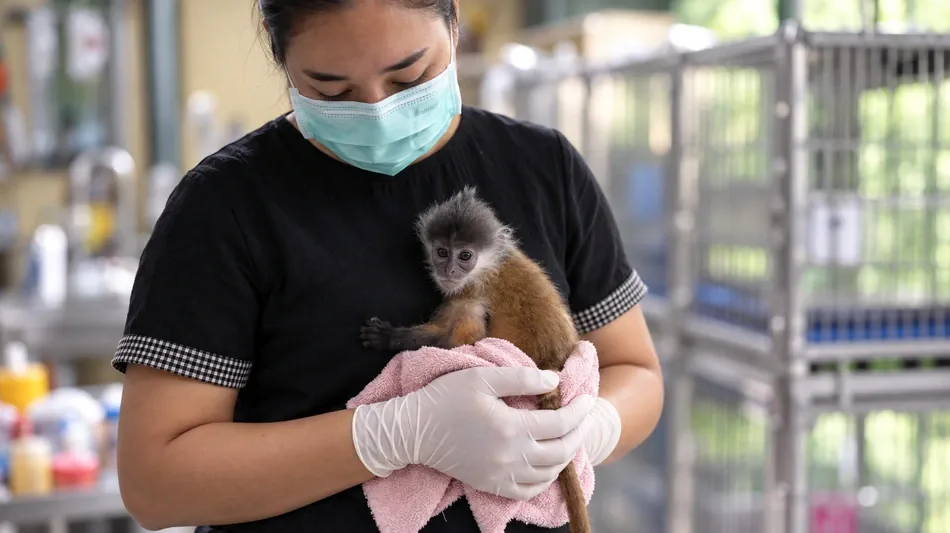
At the department’s Bangkok treatment facility, veterinarian Thanawadee Phaichana cared for a six-month-old leaf monkey intercepted in luggage at Suvarnabhumi Airport. It had been destined for India, where demand for exotic pets has increased. A second monkey in the same bag died after rescue.
Thanawadee said traffickers sometimes administer sedatives or mild anaesthetics to prevent movement or noise. Animals recovered in Bangkok and nearby areas generally receive initial treatment at the facility before transfer to a sanctuary. Older, healthier animals may eventually return to the wild; younger ones can struggle to acquire survival skills.
Trafficking offences can carry prison terms of up to 10 years for protected species and 15 years for endangered species. Recent operations include a July raid that recovered a leaf monkey, a gibbon and hundreds of turtles, alongside several airport interceptions.
Enforcement has also faced setbacks. A Thai court dismissed a case against suspected trafficking leader Boonchai Bach in 2019. The Supreme Court later sentenced him to imprisonment, but he remains at large.
The unit faces limited staffing and funding and difficulties obtaining cooperation from social media platforms. Nawee said undercover buyers sometimes use their own funds. He argued that ending demand for exotic pets would have the greatest effect on the trade.
Nawee described difficulty securing information from platforms as an additional obstacle to investigations.
F.M.Buffo--INP