Mental Health Support for Ebola Patients in Democratic Republic of Congo

 London
 7 °C

 Manchester
 6 °C
 Glasgow
 6 °C
 Dublin
 10 °C
 Belfast
 6 °C
 Washington
 16 °C
 Denver
 22 °C
 Atlanta
21 °C
 Dallas
21 °C
 Houston Texas
16 °C
 New Orleans
22 °C
 El Paso
16 °C
 Phoenix
28 °C
 Los Angeles
29 °C
San Diego
29 °C
San Francisco
21 °C
Chicago
16 °C
Minneapolis
16 °C
Seattle
12 °C
Portland
 12 °C
Salt Lake City
17 °C
Las Vegas
23 °C
Miami
 28 °C
Jacksonville
25 °C
San Antonio
17 °C
Bermuda
22 °C
Nassau
13 °C
Iqaluit
-5 °C
Yellowknife
-3 °C
Anchorage
-1 °C
Fairbanks
-9 °C
Barrow
 -10 °C
Calgary
10 °C
Edmonton
19 °C
Winnipeg
14 °C
Goose Bay
9 °C
Halifax
12 °C
Boston
12 °C
Ottawa
8 °C
Toronto
8 °C
Detroit
13 °C
Cleveland
11 °C
New York
14 °C
Baltimore
15 °C
Philadelphia
14 °C
Nuuk (Godthåb)
3 °C
Hong Kong
18 °C
Singapore
 26 °C
Melbourne
25 °C
Canberra
10 °C
Adelaide
19 °C
Darwin
27 °C
Perth
13 °C
Fort Worth
20 °C
Honolulu
27 °C
Sydney
17 °C
Johannesburg
14 °C
Dubai
29 °C
Mumbai
27 °C
Zürich
 8 °C
Tokyo
10 °C
Seoul
-1 °C
Delhi
18 °C
Beijing
-2 °C
Riyadh
21 °C
Prague
3 °C
Pennsylvania
13 °C
Valletta
20 °C
Manama
27 °C
Warsaw
-1 °C
Stockholm
4 °C
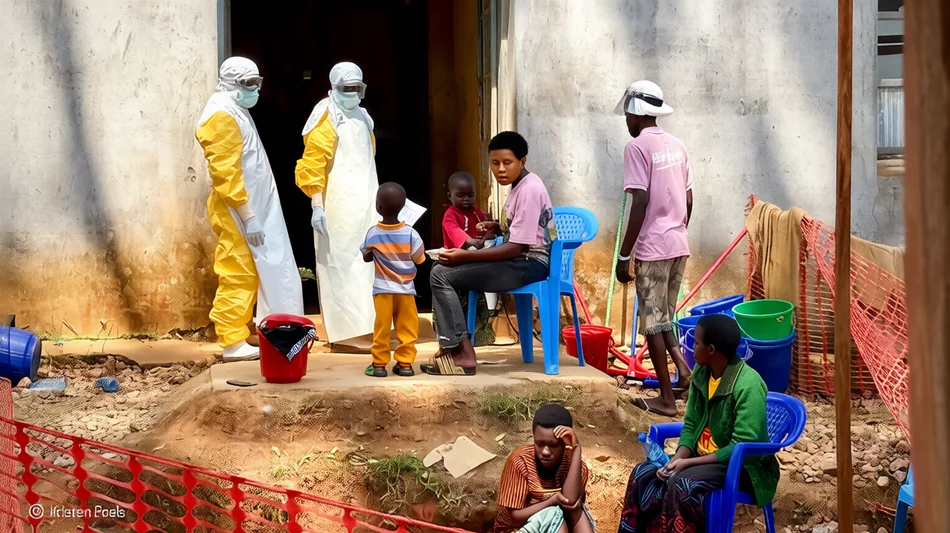
At a Doctors Without Borders Ebola treatment centre in Mongbwalu, eastern Democratic Republic of Congo, a dedicated mental health team works to support patients and their families through the trauma of the outbreak. The eight-member team addresses immediate fears upon admission, facilitates safe farewells for those who die, and provides ongoing care for survivors facing social stigma.
Mental health intervention has become a central component of the response to the ongoing Ebola outbreak in the Democratic Republic of Congo, where medical teams are addressing the profound psychological trauma experienced by patients and their communities.
At the Doctors Without Borders (MSF) Ebola treatment centre in Mongbwalu, located in the eastern part of the country, an eight-member mental health team provides continuous support to individuals undergoing treatment. The team, which includes psychologists, community mental health workers, and supervisors, works to mitigate the fear and uncertainty that accompany admission to the facility.
Phoebe Zueya Yonkeu, who served as the mental health activity manager at the Mongbwalu centre for six weeks, noted that anxiety is immediate upon a patient's arrival. "From the moment people are admitted, everyone is worried," Yonkeu said. She explained that this fear stems not only from knowledge of the disease's potential outcomes but also from false rumours circulating within communities about the treatment centre and its procedures.
To address these concerns, the team ensures that a health worker is present at the time of admission to explain what patients and their families can expect. Yonkeu observed that this initial communication often suffices to calm distressed individuals. For ongoing support, the team utilizes specially designed transparent panels installed in patient rooms. This infrastructure allows staff to counsel patients and keep relatives informed without exposing themselves to the virus, thereby maintaining a vital link between those inside the high-risk zone and the outside world.
When confidential psychological consultations are required, team members don full personal protective equipment to enter the treatment area. The scope of their work extends beyond clinical care to include grief support for families who lose loved ones. Because Ebola bodies remain highly contagious after death, traditional burial practices involving physical contact are prohibited. Families are permitted to view the deceased through a transparent barrier for a few minutes before the body is removed for safe burial.
"In a part of the world where people are accustomed to touching and embracing their dead to say goodbye, this can lead to frustration, misunderstanding and even anger," Yonkeu said. "So, here, too, we make a point of being present to listen, explain, and support them."
For patients who recover, the mental health team continues its work through a "survivors’ clinic" that provides follow-up care for several months after discharge. Yonkeu reported that many survivors face significant stigma upon returning home, including job loss and rejection by communities that mistakenly believe they remain contagious. Others struggle with guilt over the deaths of relatives or fear that they were responsible for transmitting the virus.
"Unfortunately, this is a feeling they will have to learn to live with, and we try to help them move forward," Yonkeu said. The team facilitates both individual consultations and group discussions to help patients process these experiences.
Yonkeu recalled a specific instance of how small interventions can alleviate distress. When a young girl was admitted and separated from her mother, both were in tears. The mental health team asked the child what she needed to feel better. Her immediate response was a doll. Yonkeu coordinated with the medical manager to procure one from a local market, delivering it to the girl in less than half an hour.
"I think back to her joy and her smile when we gave it to her, and how the whole team talked about it for days afterwards," Yonkeu said. "I think we probably needed that moment just as much as she did."
The current Ebola outbreak in the Democratic Republic of Congo has infected more than 10,000 people and resulted in 4,800 deaths. MSF has deployed 2,900 staff members to work alongside partners and local health teams to contain the spread of the disease.
MSF operates across 70 countries worldwide, providing emergency medical assistance in crisis zones.
O.R.Lucchese--INP