China's Logistics Sector Shows Steady Growth Driven by High-Tech Demand

 London
 11 °C

 Manchester
 7 °C
 Glasgow
 -1 °C
 Dublin
6 °C
 Belfast
4 °C
 Washington
8 °C
 Denver
3 °C
 Atlanta
10 °C
 Dallas
21 °C
 Houston Texas
22 °C
 New Orleans
14 °C
 El Paso
21 °C
 Phoenix
 21 °C
 Los Angeles
 22 °C
San Diego
22 °C
San Francisco
18 °C
Chicago
9 °C
Minneapolis
 7 °C
Seattle
8 °C
Portland
10 °C
Salt Lake City
7 °C
Las Vegas
18 °C
Miami
19 °C
Jacksonville
12 °C
San Antonio
20 °C
Bermuda
23 °C
Nassau
9 °C
Iqaluit
 -20 °C
Yellowknife
-20 °C
Anchorage
-3 °C
Fairbanks
 -11 °C
Barrow
-7 °C
Calgary
1 °C
Edmonton
11 °C
Winnipeg
-1 °C
Goose Bay
4 °C
Halifax
8 °C
Boston
9 °C
Ottawa
 2 °C
Toronto
6 °C
Detroit
6 °C
Cleveland
6 °C
New York
9 °C
Baltimore
10 °C
Philadelphia
9 °C
Nuuk (Godthåb)
-5 °C
Hong Kong
20 °C
Singapore
26 °C
Melbourne
16 °C
Canberra
20 °C
Adelaide
18 °C
Darwin
28 °C
Perth
24 °C
Fort Worth
20 °C
Honolulu
 24 °C
Sydney
27 °C
Johannesburg
18 °C
Dubai
24 °C
Mumbai
26 °C
Zürich
-1 °C
Tokyo
11 °C
Seoul
2 °C
Delhi
12 °C
Beijing
-3 °C
Riyadh
17 °C
Prague
-4 °C
Pennsylvania
8 °C
Valletta
16 °C
Manama
23 °C
Warsaw
-5 °C
Stockholm
0 °C
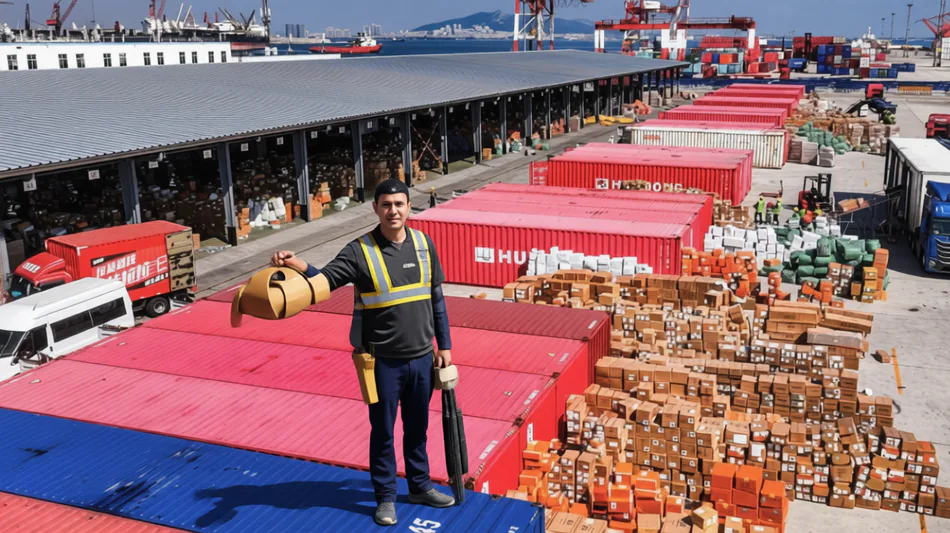
China’s logistics sector maintained steady growth through the first 10 months of 2026, with total national social logistics value rising 4.8 percent year-on-year to 312.4 trillion yuan. Official data indicates that demand is increasingly concentrated in high-tech manufacturing and equipment production, signaling a structural upgrade in the industry.
China’s logistics sector maintained steady growth through the first 10 months of 2026, with total national social logistics value rising 4.8 percent year-on-year to 312.4 trillion yuan (approximately $46.6 trillion). Official data released Saturday indicates that demand is increasingly concentrated in high-tech manufacturing and equipment production, signaling a structural upgrade in the industry.
According to figures from the China Federation of Logistics and Purchasing, the value of industrial goods logistics rose 5.3 percent during the January-to-October period. The shift toward higher-end manufacturing was particularly evident in October, when logistics demand from high-tech manufacturing grew 17.6 percent year-on-year, marking its fastest monthly expansion in nearly five years.
"The growth in logistics demand is increasingly concentrated in equipment manufacturing and high-tech manufacturing, reflecting upgrades in the structure used to transport goods," said Liu Yuhang, chief engineer of the federation.
On the import side, while the total value of import goods logistics declined 0.6 percent year-on-year in the first 10 months, specific categories showed robust gains. Imports of mechanical and electrical products rose 35 percent, and high-tech product imports increased by 44.4 percent.
Financially, China’s logistics industry generated 12.3 trillion yuan in revenue during the period, up 4.2 percent year-on-year. Revenue at major logistics enterprises grew 6.5 percent, while their operating costs per 100 yuan of revenue fell to 94.5 yuan, a decrease of 0.5 yuan from the first three quarters.
Looking ahead, Liu stated that logistics demand is expected to receive a seasonal boost toward the end of the year, driven by e-commerce promotions and increased year-end production activities. With policy measures to develop logistics networks taking effect and digital and green transformation gathering pace, China’s logistics sector is expected to maintain steady growth while further improving quality and efficiency throughout the year.
Liu noted that these improvements will provide strong support for the recovery of the real economy. The logistics networks are one of six priority networks during China's 15th Five-Year Plan period (2026-30), alongside water networks, new-type power grids, computing power networks, next-generation communication networks, and urban underground pipeline networks.
In a plan to develop these logistics networks unveiled earlier this year, China set goals to advance the development of the country's logistics network, including bringing total social logistics costs to 13.1 percent of GDP by 2030, down 0.8 percentage points from the end of 2025.
M.Lombardi--INP