Panama court annuls Hong Kong firm's canal port concession / Photo: MARTIN BERNETTI - AFP/File

 London
 10 °C
10 °C

 Manchester
 10 °C
10 °C
 Glasgow
7 °C
Glasgow
7 °C
 Dublin
5 °C
Dublin
5 °C
 Belfast
 4 °C
4 °C
 Washington
 7 °C
7 °C
 Denver
15 °C
Denver
15 °C
 Atlanta
11 °C
Atlanta
11 °C
 Dallas
16 °C
Dallas
16 °C
 Houston Texas
18 °C
Houston Texas
18 °C
 New Orleans
17 °C
New Orleans
17 °C
 El Paso
18 °C
El Paso
18 °C
 Phoenix
24 °C
Phoenix
24 °C
 Los Angeles
23 °C
San Diego
23 °C
San Francisco
14 °C
Chicago
12 °C
Minneapolis
13 °C
Seattle
10 °C
Portland
13 °C
Salt Lake City
13 °C
Las Vegas
21 °C
Miami
26 °C
Jacksonville
19 °C
San Antonio
17 °C
Bermuda
27 °C
Nassau
10 °C
Iqaluit
-4 °C
Yellowknife
Los Angeles
23 °C
San Diego
23 °C
San Francisco
14 °C
Chicago
12 °C
Minneapolis
13 °C
Seattle
10 °C
Portland
13 °C
Salt Lake City
13 °C
Las Vegas
21 °C
Miami
26 °C
Jacksonville
19 °C
San Antonio
17 °C
Bermuda
27 °C
Nassau
10 °C
Iqaluit
-4 °C
Yellowknife
 -3 °C
Anchorage
3 °C
Fairbanks
-2 °C
Barrow
-3 °C
Anchorage
3 °C
Fairbanks
-2 °C
Barrow
 -2 °C
Calgary
5 °C
Edmonton
8 °C
Winnipeg
9 °C
Goose Bay
10 °C
Halifax
3 °C
Boston
6 °C
Ottawa
8 °C
Toronto
11 °C
Detroit
11 °C
Cleveland
8 °C
New York
12 °C
Baltimore
7 °C
Philadelphia
9 °C
Nuuk (Godthåb)
-2 °C
Hong Kong
-2 °C
Calgary
5 °C
Edmonton
8 °C
Winnipeg
9 °C
Goose Bay
10 °C
Halifax
3 °C
Boston
6 °C
Ottawa
8 °C
Toronto
11 °C
Detroit
11 °C
Cleveland
8 °C
New York
12 °C
Baltimore
7 °C
Philadelphia
9 °C
Nuuk (Godthåb)
-2 °C
Hong Kong
 31 °C
Singapore
32 °C
Melbourne
25 °C
Canberra
31 °C
Singapore
32 °C
Melbourne
25 °C
Canberra
 22 °C
Adelaide
22 °C
Adelaide
 27 °C
Darwin
32 °C
Perth
20 °C
Fort Worth
16 °C
Honolulu
27 °C
Sydney
27 °C
Darwin
32 °C
Perth
20 °C
Fort Worth
16 °C
Honolulu
27 °C
Sydney
 23 °C
Johannesburg
16 °C
Dubai
30 °C
Mumbai
31 °C
Zürich
10 °C
Tokyo
27 °C
Seoul
17 °C
Delhi
19 °C
Beijing
15 °C
Riyadh
26 °C
Prague
5 °C
Pennsylvania
5 °C
Valletta
22 °C
Manama
29 °C
Warsaw
7 °C
Stockholm
3 °C
23 °C
Johannesburg
16 °C
Dubai
30 °C
Mumbai
31 °C
Zürich
10 °C
Tokyo
27 °C
Seoul
17 °C
Delhi
19 °C
Beijing
15 °C
Riyadh
26 °C
Prague
5 °C
Pennsylvania
5 °C
Valletta
22 °C
Manama
29 °C
Warsaw
7 °C
Stockholm
3 °C
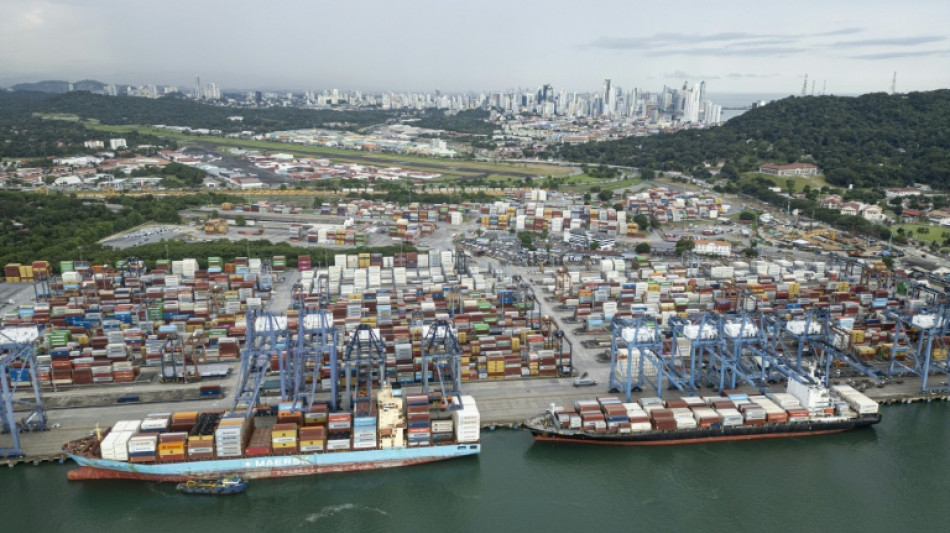
Panama's Supreme Court annulled on Thursday the concession allowing Hong Kong-based CK Hutchison to operate ports at the Panama Canal, a year after US President Donald Trump threatened to seize the crucial passageway claiming China controlled it.
The case came after Trump threatened just days into his second term to take back the canal -- built by the United States and handed to Panama in 1999 -- as he said China was effectively "operating" it.
The Supreme Court found the laws which allowed CK Hutchison Holdings to operate two of the five ports of the canal "unconstitutional," according to a court statement.
The CK Hutchison subsidiary concerned by the ruling rejected the judgement, saying that it "lacks legal basis".
The ruling "jeopardizes not only PPC (Panama Ports Company) and its contract, but also the well-being and stability of thousands of Panamanian families who depend directly and indirectly on port activity," it said.
The lawsuit to cancel the concession was brought before the Panamanian high court last year on allegations that it was based on unconstitutional laws and that the Hong Kong business was not paying taxes.
Panama Ports Company -- a CK Hutchison Holdings subsidiary -- manages the ports of Cristobal on the canal's Atlantic entrance and Balboa on the Pacific side.
The concession was automatically renewed in 2021 for another 25 years.
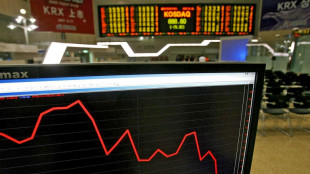
Shares in CK Hutchison declined more than 4 percent in morning trading on the Hong Kong stock exchange on Friday.
CK Hutchison Holdings is one of Hong Kong's largest conglomerates, spanning finance, retail, infrastructure, telecoms and logistics.
It has sought to sell the Panama Canal ports to a consortium led by US asset manager BlackRock. The status of that proposal is unclear following the court ruling.
- 'Taking it back' -
Chinese state media has previously slammed the proposed sale, while Beijing officials have urged parties involved to exercise "caution", warning of legal consequences should they proceed without their clearance.
In April, the Panamanian Comptroller's Office accused the firm of allegedly failing to pay the state $1.2 billion from its operations, according to an audit by the agency in charge of overseeing public spending.
Panama has been trying to avoid being dragged into what President Jose Raul Mulino last year called a "geopolitical conflict."
Mulino has insisted the canal's neutrality is intact and has urged Washington not to entangle Panama in its rivalry with Beijing.
Still, Panama has taken steps to ease the pressure from Washington.
Last year it withdrew from China's Belt and Road Initiative, and earlier this month it announced new joint US-Panama canal defense drills -- the fourth since 2025 -- aimed at boosting readiness around the 50‑mile (80‑kilometre) trade route.
The canal has become a recurring flashpoint as Trump pursues what he calls the updated "Donroe Doctrine," asserting expanded US authority in the Western Hemisphere.
In his inauguration address, the US president said: "We didn't give it to China, we gave it to Panama. And we're taking it back."
At the same time, Beijing has sharply criticized moves against its assets in Panama, including the demolition late last year of a monument honoring Chinese workers who helped build the canal and the 19th‑century railway that preceded it.
The United States and China remain the canal's top users, with around five percent of global maritime trade transiting from there.
E.Danieli--INP