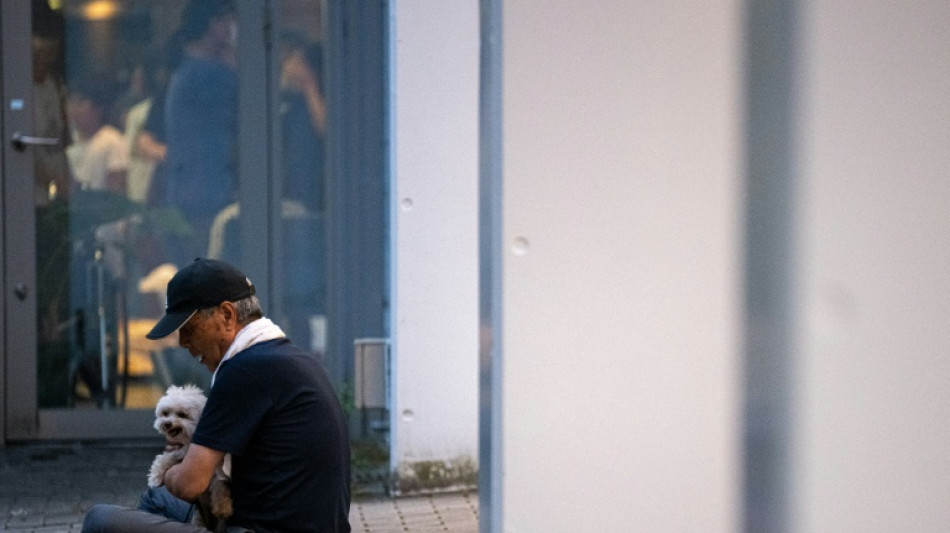
'It's exhausting': southwest Japan deals with second big quake in 10 years / Photo: Philip FONG - AFP

 London
 22 °C
22 °C

 Manchester
 17 °C
17 °C
 Glasgow
 25 °C
25 °C
 Dublin
18 °C
Dublin
18 °C
 Belfast
16 °C
Belfast
16 °C
 Washington
24 °C
Washington
24 °C
 Denver
16 °C
Denver
16 °C
 Atlanta
28 °C
Atlanta
28 °C
 Dallas
 33 °C
33 °C
 Houston Texas
33 °C
Houston Texas
33 °C
 New Orleans
32 °C
New Orleans
32 °C
 El Paso
24 °C
El Paso
24 °C
 Phoenix
32 °C
Phoenix
32 °C
 Los Angeles
22 °C
San Diego
22 °C
San Francisco
16 °C
Chicago
24 °C
Minneapolis
18 °C
Seattle
14 °C
Portland
14 °C
Salt Lake City
19 °C
Las Vegas
30 °C
Miami
33 °C
Jacksonville
29 °C
San Antonio
32 °C
Bermuda
28 °C
Nassau
21 °C
Iqaluit
5 °C
Yellowknife
6 °C
Anchorage
Los Angeles
22 °C
San Diego
22 °C
San Francisco
16 °C
Chicago
24 °C
Minneapolis
18 °C
Seattle
14 °C
Portland
14 °C
Salt Lake City
19 °C
Las Vegas
30 °C
Miami
33 °C
Jacksonville
29 °C
San Antonio
32 °C
Bermuda
28 °C
Nassau
21 °C
Iqaluit
5 °C
Yellowknife
6 °C
Anchorage
 12 °C
Fairbanks
5 °C
Barrow
-3 °C
Calgary
8 °C
Edmonton
33 °C
Winnipeg
14 °C
Goose Bay
18 °C
Halifax
19 °C
Boston
19 °C
Ottawa
16 °C
Toronto
20 °C
Detroit
22 °C
Cleveland
24 °C
New York
21 °C
Baltimore
23 °C
Philadelphia
22 °C
Nuuk (Godthåb)
6 °C
Hong Kong
29 °C
Singapore
28 °C
Melbourne
31 °C
Canberra
12 °C
Fairbanks
5 °C
Barrow
-3 °C
Calgary
8 °C
Edmonton
33 °C
Winnipeg
14 °C
Goose Bay
18 °C
Halifax
19 °C
Boston
19 °C
Ottawa
16 °C
Toronto
20 °C
Detroit
22 °C
Cleveland
24 °C
New York
21 °C
Baltimore
23 °C
Philadelphia
22 °C
Nuuk (Godthåb)
6 °C
Hong Kong
29 °C
Singapore
28 °C
Melbourne
31 °C
Canberra
 4 °C
Adelaide
4 °C
Adelaide
 11 °C
Darwin
25 °C
Perth
19 °C
Fort Worth
33 °C
Honolulu
25 °C
Sydney
12 °C
Johannesburg
19 °C
Dubai
35 °C
Mumbai
11 °C
Darwin
25 °C
Perth
19 °C
Fort Worth
33 °C
Honolulu
25 °C
Sydney
12 °C
Johannesburg
19 °C
Dubai
35 °C
Mumbai
 26 °C
Zürich
28 °C
Tokyo
23 °C
Seoul
15 °C
Delhi
30 °C
Beijing
20 °C
Riyadh
38 °C
Prague
24 °C
Pennsylvania
21 °C
Valletta
27 °C
Manama
35 °C
Warsaw
19 °C
Stockholm
15 °C
26 °C
Zürich
28 °C
Tokyo
23 °C
Seoul
15 °C
Delhi
30 °C
Beijing
20 °C
Riyadh
38 °C
Prague
24 °C
Pennsylvania
21 °C
Valletta
27 °C
Manama
35 °C
Warsaw
19 °C
Stockholm
15 °C
Sachi Nishiyama spent two years in temporary housing after twin quakes devastated southwestern Japan in 2016. This week, after another deadly jolt, she slept in her car which offers air conditioning and privacy, but is "exhausting".
Temperatures were set to hit at least 35C on Thursday in the Kumamoto region, two days after a 7.1-magnitude earthquake wreaked major damage and killed at least 28 people.
Power and water outages have affected tens of thousands of buildings, leaving residents sweltering and thirsty as they fear another big quake -- like the one 10 years ago.
"When this quake hit, I immediately knew the epicentre was close," 30-year-old Nishiyama told AFP.
"I didn't think this was going to happen here again."
In April 2016, a 7.3-magnitude earthquake struck Kumamoto two days after a magnitude 6.5 tremor. Together those quakes killed 273 people.
The Aeon shopping mall was renovated extensively to make it stronger and safer after suffering severe damage in the 2016 disaster.
The sprawling complex had reopened gleaming following another makeover in June this year, promising a place where generations could "share smiles" a decade on.
But a suspected gas explosion, around an hour after Tuesday's quake, has left the facility -- which housed global fashion brands, a cinema and a food court -- in ruins, with four people confirmed dead there.
Businessman Fumihiko Matsuura, 56, watched the latest "Toy Story" movie at the mall around a week ago.
"I was just here," he told AFP. "It's like I narrowly escaped the danger."
- 'Very tough' -
Aftershocks rattle the area a few times an hour throughout the day.
"I have bottled water and other supplies," Matsuura said, adding he would "stay scared and cautious for the next few days" in case another big quake strikes.
"You know -- what happens twice will happen three times," he said, using a Japanese saying.
Masao Mitsunaga, 57, was playing on his computer in his home office on Tuesday when his home, which he shares with his mother and brother, began shaking violently.
"I couldn't stand up. It was definitely bigger than 10 years ago. No comparison. I thought my house was going to collapse," he told AFP.
A power outage then hit in the early hours of Thursday, so the family came to an emergency shelter to escape the intense heat, forecast to reach 38C this weekend.
Convenience stores in Kumamoto remain open and brightly lit, although some shelves for fresh food like rice balls sit empty.
But "the lack of key lifelines -- water, power" has hit locals hard, said Hiroyuki Matsushima, 53, who works at a supermarket in Yatsushiro, one of the districts where shaking was strongest.
"In this heat, if you don't have electricity and air conditioning, it's very tough," the father-of-four said.
- Taking shelter -
Some people have braved the high temperatures to tidy up the mess in their houses from the quake and put workplaces back in order.
But many older and unwell residents -- in a country with the world's second-oldest population -- are taking shelter in school gyms and municipal offices.
Hundreds of older people slumbered on thin mats the hard lobby floor at a community centre in Uki city.
They slept between tables and chairs, where others congregated to watch news about the earthquake or wait in line for a warm meal.
"Thank God for these shelters," said one woman, who declined to give her name.
She had tried to stay home, or rest in her car, "but it's too hot and there are too many mosquitoes".
Marie Ryuzaki, 60, said the windows of her second-floor apartment had shattered.
"I saw my appliances fly," she said, adding that the shelters were helpful, but it was difficult to relax with so many people around.
As for Nishiyama, she said she needed to stay home to be with her cat, which she did not feel comfortable bringing to a shelter.
To get bottles of fresh water, she had travelled 30 minutes each way to the Uki city hall, making the trip twice on Wednesday.
She said many residents were choosing to sleep in their cars for privacy.
"At shelters... there are no walls or partitions between people. It's very congested."
R.Agosti--INP