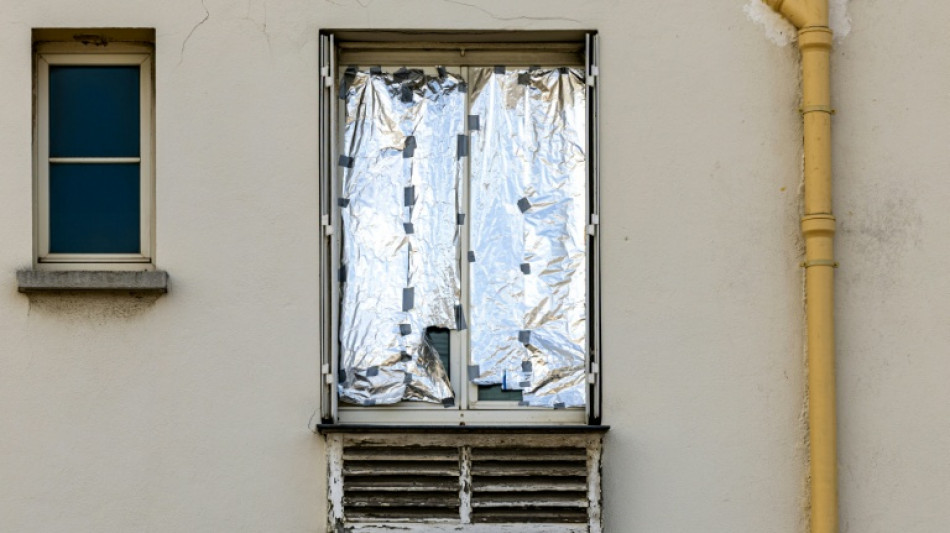
Too hot to live? French buyers rethink housing choices after heatwaves / Photo: JOEL SAGET - AFP/File

 London
 21 °C
21 °C

 Manchester
17 °C
Manchester
17 °C
 Glasgow
 15 °C
15 °C
 Dublin
19 °C
Dublin
19 °C
 Belfast
17 °C
Belfast
17 °C
 Washington
18 °C
Washington
18 °C
 Denver
 20 °C
20 °C
 Atlanta
23 °C
Atlanta
23 °C
 Dallas
 23 °C
23 °C
 Houston Texas
26 °C
Houston Texas
26 °C
 New Orleans
25 °C
New Orleans
25 °C
 El Paso
21 °C
El Paso
21 °C
 Phoenix
33 °C
Phoenix
33 °C
 Los Angeles
33 °C
San Diego
35 °C
San Francisco
Los Angeles
33 °C
San Diego
35 °C
San Francisco
 24 °C
Chicago
22 °C
Minneapolis
17 °C
Seattle
16 °C
Portland
18 °C
Salt Lake City
25 °C
Las Vegas
30 °C
Miami
24 °C
Chicago
22 °C
Minneapolis
17 °C
Seattle
16 °C
Portland
18 °C
Salt Lake City
25 °C
Las Vegas
30 °C
Miami
 32 °C
Jacksonville
30 °C
San Antonio
26 °C
Bermuda
28 °C
Nassau
17 °C
Iqaluit
1 °C
Yellowknife
6 °C
Anchorage
3 °C
Fairbanks
0 °C
Barrow
-12 °C
Calgary
11 °C
Edmonton
23 °C
Winnipeg
13 °C
Goose Bay
19 °C
Halifax
17 °C
Boston
17 °C
Ottawa
14 °C
Toronto
16 °C
Detroit
21 °C
Cleveland
20 °C
New York
17 °C
Baltimore
17 °C
Philadelphia
15 °C
Nuuk (Godthåb)
5 °C
Hong Kong
27 °C
Singapore
29 °C
Melbourne
31 °C
Canberra
32 °C
Jacksonville
30 °C
San Antonio
26 °C
Bermuda
28 °C
Nassau
17 °C
Iqaluit
1 °C
Yellowknife
6 °C
Anchorage
3 °C
Fairbanks
0 °C
Barrow
-12 °C
Calgary
11 °C
Edmonton
23 °C
Winnipeg
13 °C
Goose Bay
19 °C
Halifax
17 °C
Boston
17 °C
Ottawa
14 °C
Toronto
16 °C
Detroit
21 °C
Cleveland
20 °C
New York
17 °C
Baltimore
17 °C
Philadelphia
15 °C
Nuuk (Godthåb)
5 °C
Hong Kong
27 °C
Singapore
29 °C
Melbourne
31 °C
Canberra
 8 °C
Adelaide
13 °C
Darwin
8 °C
Adelaide
13 °C
Darwin
 26 °C
Perth
15 °C
Fort Worth
22 °C
Honolulu
24 °C
Sydney
16 °C
Johannesburg
17 °C
Dubai
26 °C
Perth
15 °C
Fort Worth
22 °C
Honolulu
24 °C
Sydney
16 °C
Johannesburg
17 °C
Dubai
 33 °C
Mumbai
31 °C
Zürich
20 °C
Tokyo
18 °C
Seoul
17 °C
Delhi
28 °C
Beijing
15 °C
Riyadh
35 °C
Prague
17 °C
Pennsylvania
15 °C
Valletta
24 °C
Manama
33 °C
Warsaw
14 °C
Stockholm
13 °C
33 °C
Mumbai
31 °C
Zürich
20 °C
Tokyo
18 °C
Seoul
17 °C
Delhi
28 °C
Beijing
15 °C
Riyadh
35 °C
Prague
17 °C
Pennsylvania
15 °C
Valletta
24 °C
Manama
33 °C
Warsaw
14 °C
Stockholm
13 °C
After multiple severe heatwaves in a single summer, French residents are increasingly factoring high temperatures into their home hunts, realtors say, bumping up features such as shutters, air conditioning and indirect sunlight on their priority lists.
In Paris in particular this summer, the steep temperatures turned apartments directly under iconic Haussmann-era buildings with zinc-covered roofs into virtual ovens.
"On the top floor of a Haussmann-style building, the heat indoors can become truly unbearable," said Joseph Denke, an estate agent with FredeLion in Paris.
He has noted a shift in buyers' priorities in recent months, including being wary of south-facing windows.
The heat risk in a studio apartment under the eaves with no through air -- windows on just one side for example -- was a negative point for Camille Couturier during a viewing with Denke.
"We're seeing that heatwaves are happening in June, or even May," the 30-year-old said.
For his future flat, he is thinking "at least 10 to 15 years ahead" and is concerned about whether he will be able to "live comfortably in it" or end up "having to flee like everyone else because it's too hot".
According to a study by Pouget Consultants and IGNES, one in two homes in France is effectively a heat trap.
Among 1,750 users of the classified ads platform Leboncoin surveyed in June, eight out of 10 said they had experienced discomfort during periods of extreme heat, with a third saying they would consider moving if heatwaves became more intense.
Experts have warned that due to climate change, this is to be expected. France's national weather agency said Monday as France braced for its fifth heatwave of the season that "future summers will generally be hotter than those experienced to date".
For Leboncoin's marketing director Sophie Bourg, heatwaves are now "firmly recognised as a structural factor in housing choices" in France.
"Coolness and summer comfort have become a property criterion in their own right," she said.
- Shutters and trees -
Orientation, floor level, swimming pools, air conditioning, shutters, the ability to create through-draughts, outdoor space, shaded terraces and even the presence of trees in a neighbourhood are now among the issues increasingly raised by buyers or tenants.
"Buyers are no longer looking only at the property itself, but at how liveable it is," said Yann Jehanno, president of the Laforet estate agency network.
"They are asking estate agents very practical questions about temperatures during the last heatwave, whether it is possible to ventilate the home at night, and whether people sleep well in the bedrooms," he said.
The concern is already affecting the appeal of certain properties.
Christian Tokoto, an estate agent with Guy Hoquet Paris 5 Maubert, is trying to sell "a magnificent apartment with large windows" in Paris's well-heeled fifth district.
"Despite lots of viewings, clients tell us it's 'too hot' because it doesn't have windows on both sides. So for now it's still on the market," he said.
Air conditioning, long disdained in France, is "no longer taboo at all", Jehanno said.
It is "a huge selling point for many buyers" if it is already installed, especially in blocks where getting permission for an AC unit can be complicated, said Laetitia Caron, chief executive of real estate media company PAP.
Sellers have adapted accordingly, she added, placing greater emphasis in listings on features linked to summer comfort such as air conditioning and shutters.
- No exodus yet -
The impact of recent heatwaves on where people choose to live is harder to assess.
"We are not seeing an exodus yet," Bourg said.
But whereas people once chose a location primarily for its attractiveness and the opportunities it offered, they are now also making decisions based on "climatic comfort", something she describes as entirely new.
Jehanno believes these trends reflect a lasting change in attitudes.
There is "clearly an impact from climate change on the property market", he said, pointing to challenges such as heatwaves, wildfires and other weather extremes.
Such risks, he said, make it increasingly difficult for buyers "to plan ahead over the 10 to 20 years of a mortgage".
D.Campanella--INP