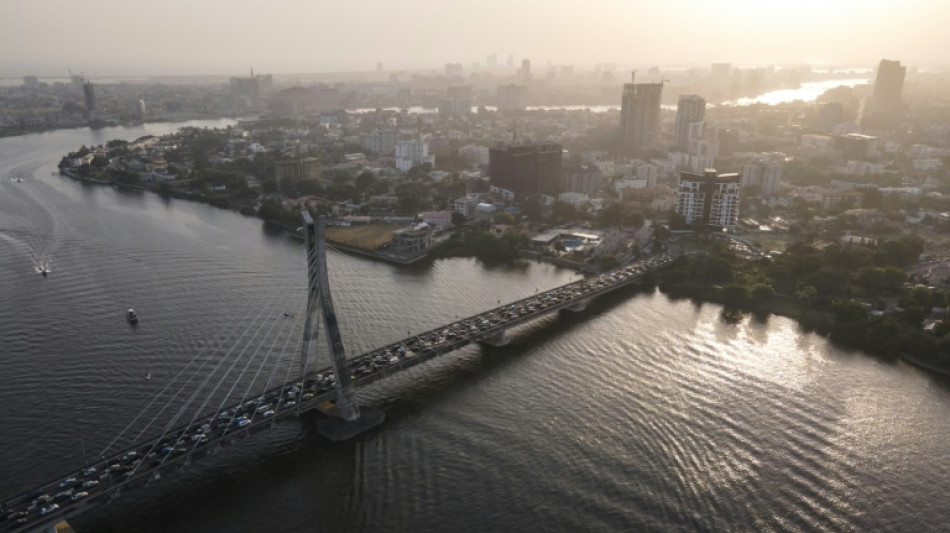
Lagos secures flood insurance for 4 million at-risk Nigerians / Photo: OLYMPIA DE MAISMONT - AFP

 London
 17 °C
17 °C

 Manchester
16 °C
Manchester
16 °C
 Glasgow
11 °C
Glasgow
11 °C
 Dublin
17 °C
Dublin
17 °C
 Belfast
17 °C
Belfast
17 °C
 Washington
18 °C
Washington
18 °C
 Denver
 24 °C
24 °C
 Atlanta
 24 °C
24 °C
 Dallas
24 °C
Dallas
24 °C
 Houston Texas
25 °C
Houston Texas
25 °C
 New Orleans
26 °C
New Orleans
26 °C
 El Paso
 22 °C
22 °C
 Phoenix
35 °C
Phoenix
35 °C
 Los Angeles
37 °C
San Diego
38 °C
San Francisco
Los Angeles
37 °C
San Diego
38 °C
San Francisco
 27 °C
Chicago
23 °C
Minneapolis
19 °C
Seattle
18 °C
Portland
22 °C
Salt Lake City
28 °C
Las Vegas
33 °C
Miami
32 °C
Jacksonville
31 °C
San Antonio
26 °C
Bermuda
28 °C
Nassau
15 °C
Iqaluit
2 °C
Yellowknife
6 °C
Anchorage
4 °C
Fairbanks
1 °C
Barrow
-8 °C
Calgary
15 °C
Edmonton
25 °C
Winnipeg
16 °C
Goose Bay
20 °C
Halifax
17 °C
Boston
17 °C
Ottawa
17 °C
Toronto
19 °C
Detroit
23 °C
Cleveland
21 °C
New York
15 °C
Baltimore
17 °C
Philadelphia
16 °C
Nuuk (Godthåb)
4 °C
Hong Kong
27 °C
Singapore
28 °C
Melbourne
31 °C
Canberra
27 °C
Chicago
23 °C
Minneapolis
19 °C
Seattle
18 °C
Portland
22 °C
Salt Lake City
28 °C
Las Vegas
33 °C
Miami
32 °C
Jacksonville
31 °C
San Antonio
26 °C
Bermuda
28 °C
Nassau
15 °C
Iqaluit
2 °C
Yellowknife
6 °C
Anchorage
4 °C
Fairbanks
1 °C
Barrow
-8 °C
Calgary
15 °C
Edmonton
25 °C
Winnipeg
16 °C
Goose Bay
20 °C
Halifax
17 °C
Boston
17 °C
Ottawa
17 °C
Toronto
19 °C
Detroit
23 °C
Cleveland
21 °C
New York
15 °C
Baltimore
17 °C
Philadelphia
16 °C
Nuuk (Godthåb)
4 °C
Hong Kong
27 °C
Singapore
28 °C
Melbourne
31 °C
Canberra
 9 °C
Adelaide
13 °C
Darwin
25 °C
Perth
14 °C
Fort Worth
22 °C
Honolulu
27 °C
Sydney
15 °C
Johannesburg
14 °C
Dubai
9 °C
Adelaide
13 °C
Darwin
25 °C
Perth
14 °C
Fort Worth
22 °C
Honolulu
27 °C
Sydney
15 °C
Johannesburg
14 °C
Dubai
 33 °C
Mumbai
30 °C
Zürich
19 °C
Tokyo
18 °C
Seoul
15 °C
Delhi
27 °C
Beijing
12 °C
Riyadh
33 °C
Prague
15 °C
Pennsylvania
16 °C
Valletta
23 °C
Manama
33 °C
Warsaw
12 °C
Stockholm
12 °C
33 °C
Mumbai
30 °C
Zürich
19 °C
Tokyo
18 °C
Seoul
15 °C
Delhi
27 °C
Beijing
12 °C
Riyadh
33 °C
Prague
15 °C
Pennsylvania
16 °C
Valletta
23 °C
Manama
33 °C
Warsaw
12 °C
Stockholm
12 °C
Nigeria's Lagos state has taken out a $7.5 million flood insurance policy to cover millions of people, the Insurance Development Forum said Thursday, as the country's economic capital faces rising sea levels and floods linked to climate change.
The coastal mega-city of Lagos and its estimated more than 22 million inhabitants are among those facing the brunt of climate change in coastal west Africa, where oceans are rising, rainfall is becoming erratic and urban populations are booming.
In a statement, Governor Babajide Olusola Sanwo-Olu warned that inaction on climate change could cost the wider state government around $40 billion by 2050, "with severe consequences for our people, infrastructure and economy".
"Our wetlands and biodiversity are also under threat. These realities demand urgent action," he said.
The policy's premium was financed to the tune of 90 percent by InsuResilience Solutions Fund -- which is itself financed by Germany -- with Lagos state covering the remainder.
It covers up to four million people across seven local government areas in the state, including for government disaster relief as well as direct cash transfers to affected communities.
The Lagos-funded portion is set to increase in the second and third year of the policy.
The scheme is a form of parametric flood insurance, which pays out under certain conditions -- such as a specific amount of rainfall, captured via satellite image -- instead of at a certain level of damage, which can take time to assess.
It wasn't immediately clear what the payout trigger would be, but the Insurance Development Forum -- a body affiliated with the United Nations Development Programme and the World Bank Group -- said the insurance was "a major milestone" in a state where 80 percent of households are low-income and "insurance penetration is below 0.5 percent".
Lagos, the most populous city in Africa's most populous country, is sinking, and is threatened by floods linked to climate change as well as poor management of waterways and expanding industry that eats up shorelines and wetlands.
R.Accetta--INP