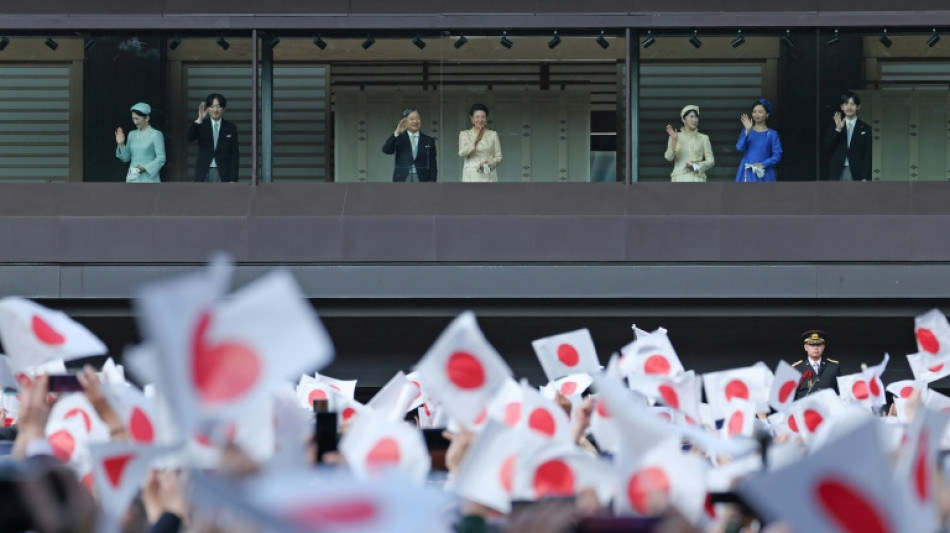
Japan PM opposes changing male-only imperial succession / Photo: STR - JIJI PRESS/AFP/File

 London
 16 °C
16 °C

 Manchester
14 °C
Manchester
14 °C
 Glasgow
8 °C
Glasgow
8 °C
 Dublin
 16 °C
16 °C
 Belfast
13 °C
Belfast
13 °C
 Washington
24 °C
Washington
24 °C
 Denver
7 °C
Denver
7 °C
 Atlanta
 21 °C
21 °C
 Dallas
27 °C
Dallas
27 °C
 Houston Texas
 25 °C
25 °C
 New Orleans
21 °C
New Orleans
21 °C
 El Paso
21 °C
El Paso
21 °C
 Phoenix
21 °C
Phoenix
21 °C
 Los Angeles
21 °C
San Diego
20 °C
San Francisco
16 °C
Chicago
16 °C
Minneapolis
7 °C
Seattle
12 °C
Portland
15 °C
Salt Lake City
8 °C
Las Vegas
17 °C
Miami
28 °C
Jacksonville
22 °C
San Antonio
Los Angeles
21 °C
San Diego
20 °C
San Francisco
16 °C
Chicago
16 °C
Minneapolis
7 °C
Seattle
12 °C
Portland
15 °C
Salt Lake City
8 °C
Las Vegas
17 °C
Miami
28 °C
Jacksonville
22 °C
San Antonio
 26 °C
Bermuda
24 °C
Nassau
17 °C
Iqaluit
26 °C
Bermuda
24 °C
Nassau
17 °C
Iqaluit
 0 °C
Yellowknife
0 °C
Anchorage
3 °C
Fairbanks
1 °C
Barrow
-9 °C
Calgary
5 °C
Edmonton
23 °C
Winnipeg
6 °C
Goose Bay
10 °C
Halifax
14 °C
Boston
15 °C
Ottawa
9 °C
Toronto
11 °C
Detroit
14 °C
Cleveland
14 °C
New York
18 °C
Baltimore
22 °C
Philadelphia
21 °C
Nuuk (Godthåb)
1 °C
Hong Kong
27 °C
Singapore
0 °C
Yellowknife
0 °C
Anchorage
3 °C
Fairbanks
1 °C
Barrow
-9 °C
Calgary
5 °C
Edmonton
23 °C
Winnipeg
6 °C
Goose Bay
10 °C
Halifax
14 °C
Boston
15 °C
Ottawa
9 °C
Toronto
11 °C
Detroit
14 °C
Cleveland
14 °C
New York
18 °C
Baltimore
22 °C
Philadelphia
21 °C
Nuuk (Godthåb)
1 °C
Hong Kong
27 °C
Singapore
 30 °C
Melbourne
27 °C
Canberra
16 °C
Adelaide
30 °C
Melbourne
27 °C
Canberra
16 °C
Adelaide
 22 °C
Darwin
30 °C
Perth
20 °C
Fort Worth
26 °C
Honolulu
25 °C
Sydney
16 °C
Johannesburg
22 °C
Darwin
30 °C
Perth
20 °C
Fort Worth
26 °C
Honolulu
25 °C
Sydney
16 °C
Johannesburg
 18 °C
Dubai
32 °C
Mumbai
34 °C
Zürich
11 °C
Tokyo
23 °C
Seoul
21 °C
Delhi
25 °C
Beijing
26 °C
Riyadh
30 °C
Prague
6 °C
Pennsylvania
18 °C
Valletta
20 °C
Manama
32 °C
Warsaw
7 °C
Stockholm
5 °C
18 °C
Dubai
32 °C
Mumbai
34 °C
Zürich
11 °C
Tokyo
23 °C
Seoul
21 °C
Delhi
25 °C
Beijing
26 °C
Riyadh
30 °C
Prague
6 °C
Pennsylvania
18 °C
Valletta
20 °C
Manama
32 °C
Warsaw
7 °C
Stockholm
5 °C
Japanese Prime Minister Sanae Takaichi told parliament on Friday that she opposes changing the imperial family's male succession rules.
The comments are her clearest on the issue -- the subject of increasing debate as a succession crisis looms -- since her party's landslide election victory this month.
Takaichi said she respected the conclusion of a panel of experts who had discussed the matter and found in 2021 that it was "appropriate to limit eligibility to those who are male-line male descendants belonging to the imperial lineage".
"The government, and I, myself as well, respect this report."
The premier previously warned that revising the imperial family's succession rules is "an urgent matter", although this would likely involve "adopting" new members.
During a policy speech last , she said that she hoped "discussions will deepen on how to ensure stable imperial succession... leading toward the revision of the Imperial House Law".
Even though tradition dictates only a man can carry on the imperial line -- which goes back 2,600 years according to legend -- opinion polls have shown high public support for a woman taking the throne.
Emperor Naruhito has a daughter, Princess Aiko, but she has been sidelined by the royal family's male-only succession rules.
Japan has debated the royal succession for decades, with a key government panel in 2005 recommending that it pass to the oldest child regardless of their sex.
That appeared to pave the way for the emperor's daughter to rise to the Chrysanthemum Throne, but the birth of Prince Hisahito, the emperor's nephew, the following year silenced the debate.
In 2021, a government-appointed expert panel advised the government to consider allowing the imperial family to "adopt" new male members -- distant relatives that could be brought back into the fold.
But it is unclear if those men would be willing to give up their careers and freedom to continue the lineage.
The panel also said royal daughters -- currently forced to leave the family after marriage -- could potentially continue their public duties after their nuptials.
Traditionalists have asserted that the "unbroken imperial line" of male succession is the foundation of Japan, and major changes would divide the nation.
Under the post-war constitution, the royal family holds no political power.
Historically, women who wed royals have faced intense pressure to produce sons and some family members are regular subjects of online and media gossip.
Empress Masako, a former high-flying diplomat, struggled for years with a stress-related illness after joining the household, which some have put down to the pressure to have a boy.
Emperess Emerita Michiko, Naruhito's mother, also suffered stress-induced illnesses.
E.Scozzafava--INP