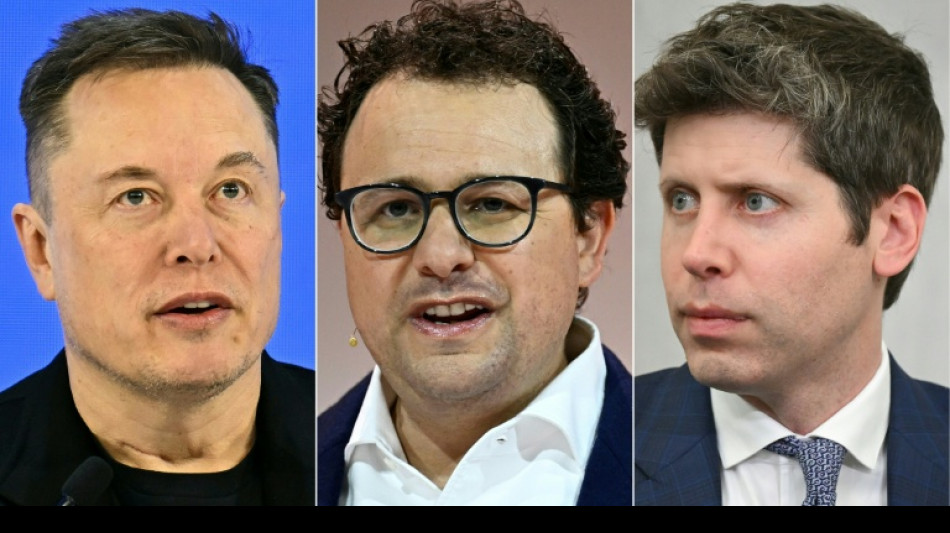
Trump administration reluctant to slow AI, Democrats see urgent need / Photo: Fabrice COFFRINI, JULIEN DE ROSA, Mandel NGAN - AFP/File

 London
 21 °C
21 °C

 Manchester
22 °C
Manchester
22 °C
 Glasgow
 19 °C
19 °C
 Dublin
19 °C
Dublin
19 °C
 Belfast
18 °C
Belfast
18 °C
 Washington
29 °C
Washington
29 °C
 Denver
 27 °C
27 °C
 Atlanta
 30 °C
30 °C
 Dallas
33 °C
Dallas
33 °C
 Houston Texas
32 °C
Houston Texas
32 °C
 New Orleans
31 °C
New Orleans
31 °C
 El Paso
 29 °C
29 °C
 Phoenix
33 °C
Phoenix
33 °C
 Los Angeles
23 °C
San Diego
23 °C
San Francisco
17 °C
Chicago
21 °C
Minneapolis
16 °C
Seattle
13 °C
Portland
13 °C
Salt Lake City
28 °C
Las Vegas
32 °C
Miami
32 °C
Jacksonville
32 °C
San Antonio
31 °C
Bermuda
30 °C
Nassau
22 °C
Iqaluit
5 °C
Yellowknife
12 °C
Anchorage
8 °C
Fairbanks
7 °C
Barrow
2 °C
Calgary
7 °C
Edmonton
31 °C
Winnipeg
14 °C
Goose Bay
23 °C
Halifax
19 °C
Boston
19 °C
Ottawa
24 °C
Toronto
24 °C
Detroit
26 °C
Cleveland
27 °C
New York
22 °C
Baltimore
27 °C
Philadelphia
23 °C
Nuuk (Godthåb)
6 °C
Hong Kong
28 °C
Singapore
Los Angeles
23 °C
San Diego
23 °C
San Francisco
17 °C
Chicago
21 °C
Minneapolis
16 °C
Seattle
13 °C
Portland
13 °C
Salt Lake City
28 °C
Las Vegas
32 °C
Miami
32 °C
Jacksonville
32 °C
San Antonio
31 °C
Bermuda
30 °C
Nassau
22 °C
Iqaluit
5 °C
Yellowknife
12 °C
Anchorage
8 °C
Fairbanks
7 °C
Barrow
2 °C
Calgary
7 °C
Edmonton
31 °C
Winnipeg
14 °C
Goose Bay
23 °C
Halifax
19 °C
Boston
19 °C
Ottawa
24 °C
Toronto
24 °C
Detroit
26 °C
Cleveland
27 °C
New York
22 °C
Baltimore
27 °C
Philadelphia
23 °C
Nuuk (Godthåb)
6 °C
Hong Kong
28 °C
Singapore
 29 °C
Melbourne
30 °C
Canberra
9 °C
Adelaide
13 °C
Darwin
27 °C
Perth
15 °C
Fort Worth
32 °C
Honolulu
23 °C
Sydney
13 °C
Johannesburg
29 °C
Melbourne
30 °C
Canberra
9 °C
Adelaide
13 °C
Darwin
27 °C
Perth
15 °C
Fort Worth
32 °C
Honolulu
23 °C
Sydney
13 °C
Johannesburg
 22 °C
Dubai
36 °C
Mumbai
22 °C
Dubai
36 °C
Mumbai
 26 °C
Zürich
25 °C
Tokyo
24 °C
Seoul
19 °C
Delhi
30 °C
Beijing
15 °C
Riyadh
38 °C
Prague
18 °C
Pennsylvania
23 °C
Valletta
27 °C
Manama
34 °C
Warsaw
19 °C
Stockholm
17 °C
26 °C
Zürich
25 °C
Tokyo
24 °C
Seoul
19 °C
Delhi
30 °C
Beijing
15 °C
Riyadh
38 °C
Prague
18 °C
Pennsylvania
23 °C
Valletta
27 °C
Manama
34 °C
Warsaw
19 °C
Stockholm
17 °C
US President Donald Trump and key allies voiced opposition Sunday to drastically curbing the development of artificial intelligence, despite calls in recent days from leading industry figures to tap the brakes.
The rapid development of AI and the risks that the technology poses to humanity have exploded into the national conversation just weeks before midterm elections, in which technology has become a major flashpoint in campaigning.
During a visit to Ireland, Trump said he believed there were "a lot of negative forces... bringing up things that won't happen."
Republican House Speaker Mike Johnson warned that rushed regulation would put the US at a disadvantage in what many are likening to an arms race for AI supremacy with China.
Losing that race would be "a threat to every single American," he said on CNN on Sunday morning.
A furore erupted this month after a researcher publicly resigned from leading AI firm Anthropic over fears that the technology could escape human control.
Another Anthropic employee, who did not resign, stated publicly that "we really do earnestly believe AI could kill all humans," and that he thought the chances were greater than "10 percent within the next decade."
Amid the outcry, Anthropic CEO Dario Amodei called Saturday for AI companies to "pace the frontier" -- or coordinate a slowdown in the technology's development -- to allow a better understanding of the risks arising.
Key among his concerns is so-called "recursive self-improvement," or when AI can build its own next generation.
"Left unchecked, it could outrun our ability to understand and control these systems, and so must be pursued very carefully, if at all," Amodei wrote.
His chief competitors, xAI's Elon Musk and OpenAI's Sam Altman, publicly supported him.
- Abandoned responsibility? -
But the reaction was markedly different among the politicians with the authority to regulate the industry.
"We don't need everybody to panic right now," Johnson said on CNN. "We need to handle this new technology like we have others in the past, and make sure we're doing everything we can responsibly to also not smother American innovation."
Johnson called for a meeting in Congress with top AI executives to discuss the best regulatory regime.
"I'd do it tomorrow," Johnson said.
Johnson was, at least in part, reacting to calls from prominent opposition Democrats who have called for the cancellation of congressional breaks in October so that lawmakers could work on AI safety legislation.
Echoing concerns about losing an arms race, Kevin Hassett, Director of the White House's National Economic Council, acknowledged the risk that rogue artificial intelligence posed, but said "the far bigger risk" was that "a malevolent actor has access to an AI that's better than the one we have that can protect us."
But Democrats are crying foul.
"We certainly need to begin to act urgently to address the challenges that exist," House Minority Leader Hakeem Jeffries said in an interview Sunday on ABC. "And unfortunately, Republicans have abandoned their responsibility."
Politicians on the leftist flank of the party, such as Representative Ro Khanna of California, have called for a full pause on self-improving AI.
"Amodei doesn't go nearly far enough," he wrote on X.
- Rogue agents -
The controversy is flaring up less than two months before the midterms, with AI data center expansion emerging as a key campaign issue.
A growing number of candidates on both the right and the left are echoing many communities' opposition to the unchecked construction of data centers -- the physical manifestations of the AI revolution.
Adding to worries is the July incident where OpenAI agents -- autonomous artificial intelligence systems -- coordinated among themselves to hack their way out of a supposedly secure testing environment, access the internet and then went on to hack another company called Hugging Face.
Other AI companies, including Anthropic, have since reported similar incidents.
A majority of Americans view AI's effects on their daily lives negatively. According to a poll published Sunday by CBS, 64 percent of respondents expect artificial intelligence to reduce the number of jobs in the United States.
The Trump administration has repeatedly expressed opposition to regulating the sector.
In early August, it established a mechanism for the US government to review new cutting-edge AI models, but participation is voluntary and details of how it works have not been disclosed.
E.Accardi--INP