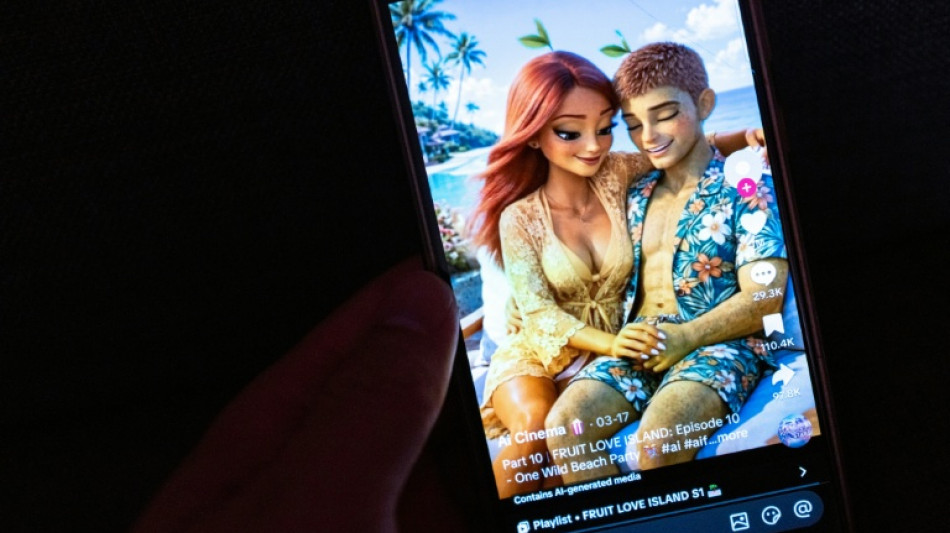
AI-generated 'Fruit Love Island' takes TikTok by storm / Photo: Philip FONG - AFP

 London
 22 °C
22 °C
 Manchester
 17 °C
17 °C
 Glasgow
 25 °C
25 °C
 Dublin
18 °C
Dublin
18 °C
 Belfast
16 °C
Belfast
16 °C
 Washington
24 °C
Washington
24 °C
 Denver
16 °C
Denver
16 °C
 Atlanta
28 °C
Atlanta
28 °C
 Dallas
 33 °C
33 °C
 Houston Texas
33 °C
Houston Texas
33 °C
 New Orleans
32 °C
New Orleans
32 °C
 El Paso
24 °C
El Paso
24 °C
 Phoenix
32 °C
Phoenix
32 °C
 Los Angeles
22 °C
San Diego
22 °C
San Francisco
16 °C
Chicago
24 °C
Minneapolis
18 °C
Seattle
14 °C
Portland
14 °C
Salt Lake City
19 °C
Las Vegas
30 °C
Miami
33 °C
Jacksonville
29 °C
San Antonio
32 °C
Bermuda
28 °C
Nassau
21 °C
Iqaluit
5 °C
Yellowknife
6 °C
Anchorage
Los Angeles
22 °C
San Diego
22 °C
San Francisco
16 °C
Chicago
24 °C
Minneapolis
18 °C
Seattle
14 °C
Portland
14 °C
Salt Lake City
19 °C
Las Vegas
30 °C
Miami
33 °C
Jacksonville
29 °C
San Antonio
32 °C
Bermuda
28 °C
Nassau
21 °C
Iqaluit
5 °C
Yellowknife
6 °C
Anchorage
 12 °C
Fairbanks
5 °C
Barrow
-3 °C
Calgary
8 °C
Edmonton
33 °C
Winnipeg
14 °C
Goose Bay
18 °C
Halifax
19 °C
Boston
19 °C
Ottawa
16 °C
Toronto
20 °C
Detroit
22 °C
Cleveland
24 °C
New York
21 °C
Baltimore
23 °C
Philadelphia
22 °C
Nuuk (Godthåb)
6 °C
Hong Kong
29 °C
Singapore
28 °C
Melbourne
31 °C
Canberra
12 °C
Fairbanks
5 °C
Barrow
-3 °C
Calgary
8 °C
Edmonton
33 °C
Winnipeg
14 °C
Goose Bay
18 °C
Halifax
19 °C
Boston
19 °C
Ottawa
16 °C
Toronto
20 °C
Detroit
22 °C
Cleveland
24 °C
New York
21 °C
Baltimore
23 °C
Philadelphia
22 °C
Nuuk (Godthåb)
6 °C
Hong Kong
29 °C
Singapore
28 °C
Melbourne
31 °C
Canberra
 4 °C
Adelaide
4 °C
Adelaide
 11 °C
Darwin
25 °C
Perth
19 °C
Fort Worth
33 °C
Honolulu
25 °C
Sydney
12 °C
Johannesburg
19 °C
Dubai
35 °C
Mumbai
11 °C
Darwin
25 °C
Perth
19 °C
Fort Worth
33 °C
Honolulu
25 °C
Sydney
12 °C
Johannesburg
19 °C
Dubai
35 °C
Mumbai
 26 °C
Zürich
28 °C
Tokyo
23 °C
Seoul
15 °C
Delhi
30 °C
Beijing
20 °C
Riyadh
38 °C
Prague
24 °C
Pennsylvania
21 °C
Valletta
27 °C
Manama
35 °C
Warsaw
19 °C
Stockholm
15 °C
26 °C
Zürich
28 °C
Tokyo
23 °C
Seoul
15 °C
Delhi
30 °C
Beijing
20 °C
Riyadh
38 °C
Prague
24 °C
Pennsylvania
21 °C
Valletta
27 °C
Manama
35 °C
Warsaw
19 °C
Stockholm
15 °C
Millions of people have been gripped by the juicy twists of an AI-generated TikTok micro-series based on the television hit "Love Island" -- except all the participants are sexy human-like fruit.
The exploits of the bizarre animated characters, including "Strawberina" and a buff open-shirt "Bananito", parody reality TV tropes, from love triangles to emotional re-couplings.
Each short clip is hosted by a voluptuous green apple, and the most popular, "Episode 15: New Dates... New Doubts", has been viewed 39 million times since being posted two weeks ago.
For comparison, the big-budget 2025 Eurovision Song Contest says it reached 166 million people.
Many have dismissed the fruity videos as so-called artificial intelligence "slop" -- poor-quality content churned out to appeal to the lowest common denominator.
But their mass consumption also signals "demand for media that helps people to switch off, to have a laugh, or to relax for a few minutes", Ludmila Lupinacci, lecturer in digital media at the University of Leeds, told AFP.
That desire may be heightened when "social platforms also give us access to horrifying, stressful, violent, and overall negative experiences", she added.
The micro-drama was started in mid-March by an account called "Ai Cinema". It does not disclose who runs it or where it is based.
"Thank you guys for watching this has been fun!" it said in the caption of a series finale posted Wednesday.
The sudden popularity of "Fruit Love Island" has spawned many fake TikTok accounts publishing copycat episodes, while some of the original clips appear to have been removed from the platform.
- 'Hate-watching' -
"I'm not going to lie, I didn't expect you to be this easy to talk to," a watermelon woman tells her dragon-fruit date over their corresponding fruit cocktails at sunset.
"Is this cannibalism?" laughed YouTuber Annamarie Forcino in a review posted this week, titled "Fruit Love Island is pure AI slop".
"Sure, AI data centres consume massive amounts of energy, contribute to air pollution, and drain the water supply from local communities," Forcino said.
"But would you rather have clean air and lower electricity bills or Cocomelon for adults?" she joked, referring to the animated children's channel that is among YouTube's most subscribed.
In her video, Forcino points out the tell-tale visual inconsistencies that pepper AI-generated videos: "Why is this girl's right arm pink, but this one green?"
ChatGPT maker OpenAI recently said it would shut down its AI video generation app Sora, barely six months after its launch, in a shift towards business tools.
Meanwhile, Chinese video generators, like Seedance 2.0 from TikTok creator ByteDance, have wowed users and spooked the creative industries with their almost-cinematic quality.
"Fruit Love Island" is one of a bunch of other fruit-themed content spreading on social media, from fellow TV parody "Fruit Paternity Court" to a slew of other memes in different languages that often reinforce sexist or racist stereotypes.
Fruit is an absurd but also simple way to reflect the formulaic, sensationalist and stereotypical world of dating reality TV, Lupinacci said.
Its AI quirks "might indeed be actually part of the appeal, as they make it funnier, more bizarre, and potentially more engaging -- even if prone to mockery and hate-watching".
A.Imbrogno--INP