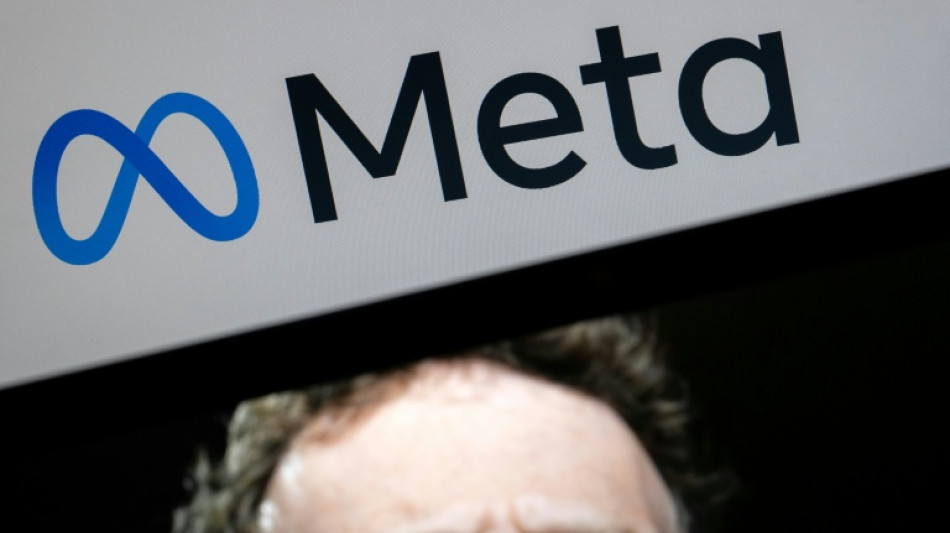
Threats to US lawmakers spiked after Meta eased moderation: watchdog / Photo: Drew ANGERER - AFP

 London
 21 °C
21 °C

 Manchester
19 °C
Manchester
19 °C
 Glasgow
23 °C
Glasgow
23 °C
 Dublin
 16 °C
16 °C
 Belfast
 14 °C
14 °C
 Washington
 18 °C
18 °C
 Denver
19 °C
Denver
19 °C
 Atlanta
 20 °C
20 °C
 Dallas
27 °C
Dallas
27 °C
 Houston Texas
28 °C
Houston Texas
28 °C
 New Orleans
27 °C
New Orleans
27 °C
 El Paso
18 °C
El Paso
18 °C
 Phoenix
28 °C
Phoenix
28 °C
 Los Angeles
21 °C
San Diego
22 °C
San Francisco
14 °C
Chicago
18 °C
Minneapolis
15 °C
Seattle
9 °C
Portland
10 °C
Salt Lake City
20 °C
Las Vegas
26 °C
Miami
29 °C
Jacksonville
23 °C
San Antonio
27 °C
Bermuda
27 °C
Nassau
17 °C
Iqaluit
2 °C
Yellowknife
2 °C
Anchorage
6 °C
Fairbanks
Los Angeles
21 °C
San Diego
22 °C
San Francisco
14 °C
Chicago
18 °C
Minneapolis
15 °C
Seattle
9 °C
Portland
10 °C
Salt Lake City
20 °C
Las Vegas
26 °C
Miami
29 °C
Jacksonville
23 °C
San Antonio
27 °C
Bermuda
27 °C
Nassau
17 °C
Iqaluit
2 °C
Yellowknife
2 °C
Anchorage
6 °C
Fairbanks
 3 °C
Barrow
3 °C
Barrow
 1 °C
Calgary
1 °C
Edmonton
18 °C
Winnipeg
13 °C
Goose Bay
16 °C
Halifax
16 °C
Boston
14 °C
Ottawa
19 °C
Toronto
19 °C
Detroit
18 °C
Cleveland
19 °C
New York
16 °C
Baltimore
16 °C
Philadelphia
15 °C
Nuuk (Godthåb)
1 °C
Hong Kong
29 °C
Singapore
1 °C
Calgary
1 °C
Edmonton
18 °C
Winnipeg
13 °C
Goose Bay
16 °C
Halifax
16 °C
Boston
14 °C
Ottawa
19 °C
Toronto
19 °C
Detroit
18 °C
Cleveland
19 °C
New York
16 °C
Baltimore
16 °C
Philadelphia
15 °C
Nuuk (Godthåb)
1 °C
Hong Kong
29 °C
Singapore
 26 °C
Melbourne
26 °C
Canberra
9 °C
Adelaide
13 °C
Darwin
27 °C
Perth
26 °C
Melbourne
26 °C
Canberra
9 °C
Adelaide
13 °C
Darwin
27 °C
Perth
 15 °C
Fort Worth
26 °C
Honolulu
25 °C
Sydney
13 °C
Johannesburg
26 °C
Dubai
35 °C
Mumbai
29 °C
Zürich
27 °C
Tokyo
22 °C
Seoul
19 °C
Delhi
27 °C
Beijing
18 °C
Riyadh
39 °C
Prague
21 °C
Pennsylvania
15 °C
Valletta
26 °C
Manama
35 °C
Warsaw
20 °C
Stockholm
17 °C
15 °C
Fort Worth
26 °C
Honolulu
25 °C
Sydney
13 °C
Johannesburg
26 °C
Dubai
35 °C
Mumbai
29 °C
Zürich
27 °C
Tokyo
22 °C
Seoul
19 °C
Delhi
27 °C
Beijing
18 °C
Riyadh
39 °C
Prague
21 °C
Pennsylvania
15 °C
Valletta
26 °C
Manama
35 °C
Warsaw
20 °C
Stockholm
17 °C
From explicit calls for murder to sexual harassment, violent threats targeting US lawmakers on Facebook rocketed after tech giant Meta rolled back key content moderation policies last year, a tech watchdog said Tuesday.
The report from the nonprofit Center for Countering Digital Hate (CCDH) analyzed nearly eight million Facebook comments targeting 100 members of Congress in the six months before and after Meta eased safeguards in what was billed as an attempt to protect free speech.
Violent threats targeting lawmakers on both sides of the political aisle -- including calls for murder -- quadrupled, harassment more than doubled, while racist and gendered abuse jumped on the platform, the report said.
CCDH also found that comments inciting violence against President Donald Trump surged after the policy changes, including one that he "deserves a bullet through his head."
"When platforms stop enforcing their own rules against threats, hate, and harassment, they become complicit in normalizing intimidation and harassment of elected officials," said Imran Ahmed, chief executive of CCDH.
"The result is a culture where violence feels easier to justify and radicals feel empowered."
In a statement, a Meta spokesman said the Palo Alto company regularly issues public reports tracking "violating content" on its platforms and "the prevalence of hateful conduct did not increase throughout 2025."
AFP shared CCDH's report with Meta but the spokesman said: "We cannot address the claims in this report as we were not provided it in advance of publication."
In recent years, politicians as well as election officials across the United States have reported escalating threats, intimidation and harassment.
Minnesota state legislator Melissa Hortman and her husband were shot and killed in a politically motivated attack last year. In April, a shooting disrupted the White House correspondents dinner attended by Trump, who had to be evacuated from the dinner at the Washington Hilton hotel -- one of several such incidents.
"When companies reduce oversight in areas like violence, hate, and harassment, it should not be any surprise to see those harms increase," John Curtis, a Republican senator from Utah, said in a statement to CCDH.
"Similarly, the reported surge in abusive and threatening content directed at public officials is deeply concerning, particularly in light of recent events."
The CCDH report comes after the tech giant ditched US fact-checkers in January 2025 and turned over the task of debunking falsehoods to ordinary users under a model known as "Community Notes," popularized by Elon Musk's platform X.
The decision was widely seen as an attempt to appease Trump's new administration, whose conservative support base has long complained that fact-checking on tech platforms was a way to curtail free speech and censor right-wing content.
Meta also rolled back speech restrictions around topics such as gender and sexual identity, triggering concern from advocacy groups.
The International Fact-Checking Network has previously warned of devastating consequences if Meta broadens its policy shift related to fact-checkers beyond US borders to the company's programs covering more than 100 countries.
AFP currently works in 26 languages with Meta's fact-checking program, including in Asia, Latin America, and the European Union.
S.Maiolo--INP