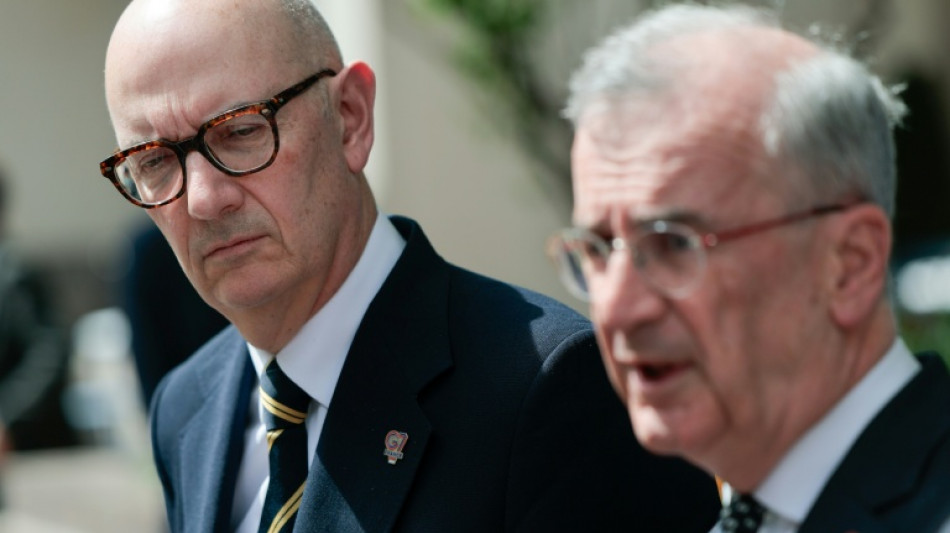
France finance minister says Hormuz must open, G7 ready to mitigate war fallout / Photo: Kent Nishimura - AFP

 London
 13 °C
13 °C
 Manchester
12 °C
Manchester
12 °C
 Glasgow
 10 °C
10 °C
 Dublin
 15 °C
15 °C
 Belfast
15 °C
Belfast
15 °C
 Washington
15 °C
Washington
15 °C
 Denver
18 °C
Denver
18 °C
 Atlanta
17 °C
Atlanta
17 °C
 Dallas
 27 °C
27 °C
 Houston Texas
27 °C
Houston Texas
27 °C
 New Orleans
25 °C
New Orleans
25 °C
 El Paso
25 °C
El Paso
25 °C
 Phoenix
31 °C
Phoenix
31 °C
 Los Angeles
24 °C
San Diego
24 °C
San Francisco
14 °C
Chicago
14 °C
Minneapolis
16 °C
Seattle
Los Angeles
24 °C
San Diego
24 °C
San Francisco
14 °C
Chicago
14 °C
Minneapolis
16 °C
Seattle
 11 °C
Portland
15 °C
Salt Lake City
19 °C
Las Vegas
30 °C
Miami
25 °C
Jacksonville
18 °C
San Antonio
28 °C
Bermuda
28 °C
Nassau
14 °C
Iqaluit
2 °C
Yellowknife
3 °C
Anchorage
10 °C
Fairbanks
11 °C
Barrow
2 °C
Calgary
3 °C
Edmonton
13 °C
Winnipeg
17 °C
Goose Bay
14 °C
Halifax
15 °C
Boston
14 °C
Ottawa
12 °C
Toronto
14 °C
Detroit
13 °C
Cleveland
13 °C
New York
15 °C
Baltimore
17 °C
Philadelphia
15 °C
Nuuk (Godthåb)
-1 °C
Hong Kong
11 °C
Portland
15 °C
Salt Lake City
19 °C
Las Vegas
30 °C
Miami
25 °C
Jacksonville
18 °C
San Antonio
28 °C
Bermuda
28 °C
Nassau
14 °C
Iqaluit
2 °C
Yellowknife
3 °C
Anchorage
10 °C
Fairbanks
11 °C
Barrow
2 °C
Calgary
3 °C
Edmonton
13 °C
Winnipeg
17 °C
Goose Bay
14 °C
Halifax
15 °C
Boston
14 °C
Ottawa
12 °C
Toronto
14 °C
Detroit
13 °C
Cleveland
13 °C
New York
15 °C
Baltimore
17 °C
Philadelphia
15 °C
Nuuk (Godthåb)
-1 °C
Hong Kong
 32 °C
Singapore
32 °C
Singapore
 24 °C
Melbourne
23 °C
Canberra
13 °C
Adelaide
21 °C
Darwin
33 °C
Perth
19 °C
Fort Worth
27 °C
Honolulu
26 °C
Sydney
13 °C
Johannesburg
24 °C
Melbourne
23 °C
Canberra
13 °C
Adelaide
21 °C
Darwin
33 °C
Perth
19 °C
Fort Worth
27 °C
Honolulu
26 °C
Sydney
13 °C
Johannesburg
 12 °C
Dubai
12 °C
Dubai
 33 °C
Mumbai
30 °C
Zürich
10 °C
Tokyo
23 °C
Seoul
27 °C
Delhi
25 °C
Beijing
26 °C
Riyadh
32 °C
Prague
9 °C
Pennsylvania
18 °C
Valletta
23 °C
Manama
34 °C
Warsaw
10 °C
Stockholm
8 °C
33 °C
Mumbai
30 °C
Zürich
10 °C
Tokyo
23 °C
Seoul
27 °C
Delhi
25 °C
Beijing
26 °C
Riyadh
32 °C
Prague
9 °C
Pennsylvania
18 °C
Valletta
23 °C
Manama
34 °C
Warsaw
10 °C
Stockholm
8 °C
French Finance Minister Roland Lescure told reporters Thursday that the Strait of Hormuz needs to reopen "but not at any price," adding that G7 leaders stand ready to mitigate the economic fallout from war.
The Middle East war erupted after US-Israeli strikes targeting Iran on February 28, prompting Tehran to virtually block the Strait of Hormuz in retaliation.
Energy prices have soared since, with the strait being a key waterway for oil and gas transit.
The conflict, alongside support for Ukraine and cooperation on critical minerals, were key topics discussed by the Group of Seven advanced economies at their first in-person meeting this year held in Washington.
"We need to make sure that we understand where the balance of risks is tilting in the next few weeks," Lescure said Thursday.
"We are meeting again in a month's time in Paris and we want to make sure that we monitor the situation, we evaluate the impact," he added.
"If we need to act, as we did with releasing inventories a few weeks back, we will," he said.
Lescure spoke on the sidelines of the International Monetary Fund and World Bank spring meetings, which bring together finance ministers, central bankers and other leaders in the US capital this week.
Last month, the International Energy Agency, which includes G7 nations, released a record amount of oil from their strategic reserves to ease market turbulence.
Lescure said "the general feeling was gravity" among the G7 when it came to the war.
But he added of the Strait of Hormuz blockage: "We need this to open, but not at any price."
His comments come as French President Emmanuel Macron is hosting talks in Paris on Friday with UK Prime Minister Keir Starmer on navigation through the Strait of Hormuz once there is a ceasefire.
"I don't want to pay $1 to go through the Strait of Hormuz," Lescure added.
"We value the fact that negotiation seems to be going on, and I hope they produce a result," he said.
- 'Collateral damage' -
The G7 also vowed to support Ukraine ahead of next winter, following Russian attacks on its energy infrastructure.
Russia's invasion of Ukraine, launched in 2022, has become the deadliest conflict in Europe since World War II.
"Russia mustn't be getting benefits from what's happening in Iran," Lescure said, adding that Ukraine should not be "collateral damage" either.
The United States in March temporarily allowed the sale of Russian oil that was at sea, a move to soften global supply shocks from its war on Iran.
But US Treasury Secretary Scott Bessent said Wednesday that Washington will not extend the waiver, which has expired.
Bank of France governor Francois Villeroy de Galhau added Thursday that central banks will act "without hesitation" to deal with the war's economic impact, but stressed that officials are not in a rush.
Besides France, which holds the rotating G7 presidency, the grouping comprises the United States, Canada, Britain, Germany, Italy and Japan.
O.R.Lucchese--INP