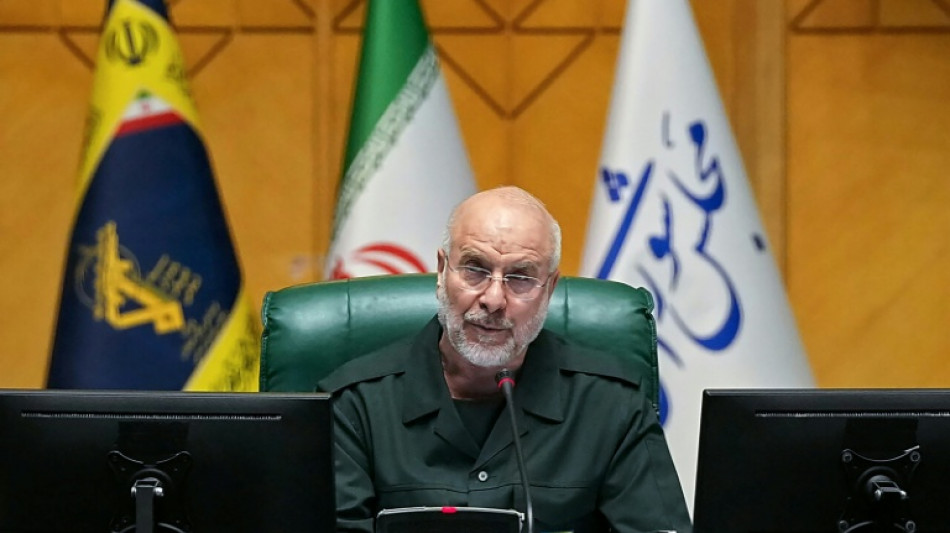
Ghalibaf: Iran's new strongman running war effort / Photo: - - ICANA NEWS AGENCY/AFP

 London
 18 °C
18 °C

 Manchester
 18 °C
18 °C
 Glasgow
 17 °C
17 °C
 Dublin
16 °C
Dublin
16 °C
 Belfast
 16 °C
16 °C
 Washington
 16 °C
16 °C
 Denver
14 °C
Denver
14 °C
 Atlanta
14 °C
Atlanta
14 °C
 Dallas
23 °C
Dallas
23 °C
 Houston Texas
23 °C
Houston Texas
23 °C
 New Orleans
21 °C
New Orleans
21 °C
 El Paso
20 °C
El Paso
20 °C
 Phoenix
 27 °C
27 °C
 Los Angeles
20 °C
San Diego
20 °C
San Francisco
14 °C
Chicago
13 °C
Minneapolis
15 °C
Seattle
9 °C
Portland
9 °C
Salt Lake City
18 °C
Las Vegas
Los Angeles
20 °C
San Diego
20 °C
San Francisco
14 °C
Chicago
13 °C
Minneapolis
15 °C
Seattle
9 °C
Portland
9 °C
Salt Lake City
18 °C
Las Vegas
 27 °C
Miami
27 °C
Miami
 24 °C
Jacksonville
16 °C
San Antonio
25 °C
Bermuda
28 °C
Nassau
13 °C
Iqaluit
24 °C
Jacksonville
16 °C
San Antonio
25 °C
Bermuda
28 °C
Nassau
13 °C
Iqaluit
 2 °C
Yellowknife
6 °C
Anchorage
8 °C
Fairbanks
2 °C
Barrow
-1 °C
Calgary
6 °C
Edmonton
12 °C
Winnipeg
17 °C
Goose Bay
11 °C
Halifax
13 °C
Boston
14 °C
Ottawa
10 °C
Toronto
12 °C
Detroit
11 °C
Cleveland
10 °C
New York
14 °C
Baltimore
17 °C
Philadelphia
14 °C
Nuuk (Godthåb)
2 °C
Yellowknife
6 °C
Anchorage
8 °C
Fairbanks
2 °C
Barrow
-1 °C
Calgary
6 °C
Edmonton
12 °C
Winnipeg
17 °C
Goose Bay
11 °C
Halifax
13 °C
Boston
14 °C
Ottawa
10 °C
Toronto
12 °C
Detroit
11 °C
Cleveland
10 °C
New York
14 °C
Baltimore
17 °C
Philadelphia
14 °C
Nuuk (Godthåb)
 0 °C
Hong Kong
29 °C
Singapore
31 °C
Melbourne
19 °C
Canberra
15 °C
Adelaide
14 °C
Darwin
28 °C
Perth
16 °C
Fort Worth
22 °C
Honolulu
26 °C
Sydney
19 °C
Johannesburg
26 °C
Dubai
36 °C
Mumbai
31 °C
Zürich
23 °C
Tokyo
19 °C
Seoul
22 °C
Delhi
28 °C
Beijing
23 °C
Riyadh
41 °C
Prague
19 °C
Pennsylvania
15 °C
Valletta
26 °C
Manama
39 °C
Warsaw
15 °C
Stockholm
14 °C
0 °C
Hong Kong
29 °C
Singapore
31 °C
Melbourne
19 °C
Canberra
15 °C
Adelaide
14 °C
Darwin
28 °C
Perth
16 °C
Fort Worth
22 °C
Honolulu
26 °C
Sydney
19 °C
Johannesburg
26 °C
Dubai
36 °C
Mumbai
31 °C
Zürich
23 °C
Tokyo
19 °C
Seoul
22 °C
Delhi
28 °C
Beijing
23 °C
Riyadh
41 °C
Prague
19 °C
Pennsylvania
15 °C
Valletta
26 °C
Manama
39 °C
Warsaw
15 °C
Stockholm
14 °C
Mohammad Bagher Ghalibaf, Iran's parliament speaker and a veteran of the Revolutionary Guards, has emerged as the highest-profile political figure in the Islamic republic after the killing of its leaders.
A pillar of the Iranian establishment for some three decades and one of the Islamic republic's most prominent non-clerical figures, Ghalibaf, 64, now appears to be playing a key role spearheading the war effort.
Whereas the son and successor of slain supreme leader Ali Khamenei, Mojtaba Khamenei, has not appeared in public and has issued just three written statements, Ghalibaf has been unleashing regular posts on X and giving multiple interviews.
"We are in an unequal war, with an asymmetrical set-up, we must do something and use equipment with our own culture, design and creativity," he told Iranian television on Wednesday.
In a post on X, he added that after attacks on Iranian energy infrastructure, "an eye-for-an-eye sum is in effect, and a new level of confrontation has begun".
However, possibly aware of the threat to his own security, he did not, unlike the late Larijani, appear in public at pro-government rallies last week in support of the Palestinian cause.
Larijani was killed in an Israeli air strike on Monday, which followed the killing of Khamenei at the start of the war on February 28.
Ghalibaf's varied experience, which spans military and civilian life, has seen him work as commander of the Revolutionary Guards aerospace corps, Tehran police chief, Tehran mayor and now speaker of parliament.
Known to be fiercely ambitious, he has stood for the Iranian presidency on multiple occasions but has never been successful, most notably in 2005 when the ultra-conservative Mahmoud Ahmadinejad, little-known at the time, took the presidency.
A qualified pilot, Ghalibaf is known for boasting that he is able to captain jumbo jets.
Farzan Sabet, a managing researcher at the Geneva Graduate Institute, said that after Larijani's killing Ghalibaf was the "person likely overseeing the war effort and strategy".
"He's the speaker of parliament, a former senior IRGC commander and has strong cross-factional and institutional ties, positioning him well to move into this role," he told AFP.
- 'Very favourable position' -
Ghalibaf fought in the 1980-1988 Iran-Iraq War and rose rapidly through the ranks. He reached the upper echelons of the military establishment in the late 1990s when he became commander of the Guards' fledgling aerospace forces.
He was then named national police commander in 1999, against the backdrop of unprecedented student protests.
He has long coveted the presidency, running in 2005, 2013 and 2024, and briefly entering the 2017 race before withdrawing in favour of another conservative candidate. His strongest showing came in 2013, when he finished second.
After the 2005 presidential election loss, he was elected mayor of Tehran.
During his 12 years as mayor, supporters praised his technocratic approach and focus on urban management, while critics pointed to allegations of financial corruption.
Human rights groups have accused Ghalibaf, in his various functions, of playing a key role in suppressing protests, from the 1999 student demonstrations through to the 2009 Green movement that erupted after a disputed election right up to the nationwide protests that peaked in January 2026.
Ghalibaf was elected speaker of parliament in 2020, at times advocating economic reforms and stronger parliamentary oversight while remaining aligned with the Islamic republic's core institutions.
"Iran's strongest man is now probably Ghalibaf," said Arash Azizi, lecturer at Yale University, describing him as "a rare figure whose portfolio crosses between military, security and political functions of the regime".
"He is known to be running the war effort now," Azizi said, adding that Ghalibaf appeared to be an ally of Mojtaba Khamenei.
"He seems to be in a very favourable position now."
Ghalibaf has predicted the war would reshape the Middle East, but not on Washington's terms.
"The order here will change, but it will not be an order in which the will of the United States prevails," he said in a recorded video interview carried by Tasnim news agency and other media.
O.Nardolillo--INP