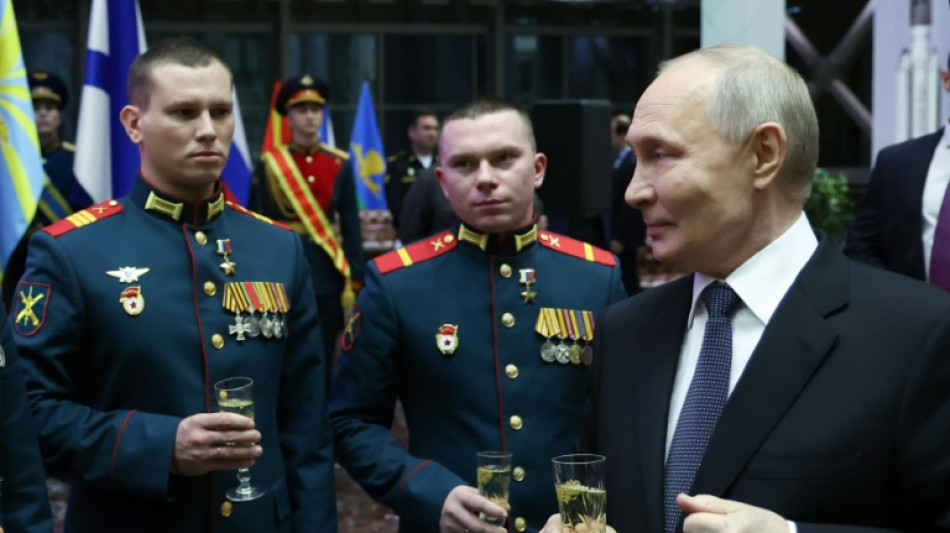
Putin, emboldened by Ukraine gains, to hold annual presser / Photo: Alexander KAZAKOV - POOL/AFP
 London
 16 °C
16 °C
 Manchester
 12 °C
12 °C
 Glasgow
 15 °C
15 °C
 Dublin
13 °C
Dublin
13 °C
 Belfast
12 °C
Belfast
12 °C
 Washington
18 °C
Washington
18 °C
 Denver
23 °C
Denver
23 °C
 Atlanta
 25 °C
25 °C
 Dallas
36 °C
Dallas
36 °C
 Houston Texas
36 °C
Houston Texas
36 °C
 New Orleans
 33 °C
33 °C
 El Paso
 19 °C
19 °C
 Phoenix
36 °C
Phoenix
36 °C
 Los Angeles
29 °C
San Diego
Los Angeles
29 °C
San Diego
 27 °C
San Francisco
24 °C
Chicago
18 °C
Minneapolis
20 °C
Seattle
17 °C
Portland
20 °C
Salt Lake City
24 °C
Las Vegas
33 °C
Miami
28 °C
Jacksonville
27 °C
San Antonio
35 °C
Bermuda
29 °C
Nassau
20 °C
Iqaluit
10 °C
Yellowknife
14 °C
Anchorage
7 °C
Fairbanks
4 °C
Barrow
-3 °C
Calgary
19 °C
Edmonton
21 °C
Winnipeg
18 °C
Goose Bay
19 °C
Halifax
15 °C
Boston
16 °C
Ottawa
19 °C
Toronto
18 °C
Detroit
18 °C
Cleveland
20 °C
New York
20 °C
Baltimore
19 °C
Philadelphia
20 °C
Nuuk (Godthåb)
4 °C
Hong Kong
27 °C
Singapore
27 °C
Melbourne
27 °C
Canberra
10 °C
Adelaide
18 °C
Darwin
24 °C
Perth
27 °C
San Francisco
24 °C
Chicago
18 °C
Minneapolis
20 °C
Seattle
17 °C
Portland
20 °C
Salt Lake City
24 °C
Las Vegas
33 °C
Miami
28 °C
Jacksonville
27 °C
San Antonio
35 °C
Bermuda
29 °C
Nassau
20 °C
Iqaluit
10 °C
Yellowknife
14 °C
Anchorage
7 °C
Fairbanks
4 °C
Barrow
-3 °C
Calgary
19 °C
Edmonton
21 °C
Winnipeg
18 °C
Goose Bay
19 °C
Halifax
15 °C
Boston
16 °C
Ottawa
19 °C
Toronto
18 °C
Detroit
18 °C
Cleveland
20 °C
New York
20 °C
Baltimore
19 °C
Philadelphia
20 °C
Nuuk (Godthåb)
4 °C
Hong Kong
27 °C
Singapore
27 °C
Melbourne
27 °C
Canberra
10 °C
Adelaide
18 °C
Darwin
24 °C
Perth
 12 °C
Fort Worth
36 °C
Honolulu
29 °C
Sydney
16 °C
Johannesburg
16 °C
Dubai
34 °C
Mumbai
29 °C
Zürich
13 °C
Tokyo
20 °C
Seoul
18 °C
Delhi
28 °C
Beijing
22 °C
Riyadh
33 °C
Prague
11 °C
Pennsylvania
19 °C
Valletta
23 °C
Manama
32 °C
Warsaw
12 °C
Fort Worth
36 °C
Honolulu
29 °C
Sydney
16 °C
Johannesburg
16 °C
Dubai
34 °C
Mumbai
29 °C
Zürich
13 °C
Tokyo
20 °C
Seoul
18 °C
Delhi
28 °C
Beijing
22 °C
Riyadh
33 °C
Prague
11 °C
Pennsylvania
19 °C
Valletta
23 °C
Manama
32 °C
Warsaw
 10 °C
Stockholm
7 °C
10 °C
Stockholm
7 °C
Russia's President Vladimir Putin will hold his annual press conference -- a staple of his 25-year rule -- Friday, emboldened by battlefield gains in Ukraine and during a diplomatic push to end the almost four-year war.
As Russia's offensive enters another winter, Putin has spent days telling Russians that Moscow will seize the rest of eastern Ukraine by force if diplomacy fails.
The Russian leader launched the assault on Ukraine in February 2022, which became Europe's worst conflict since World War II, killing thousands on both sides.
Russia has since then lived under massive Western sanctions, along with a domestic crackdown on dissent unseen since the Soviet era.
Putin will speak as the EU scrambles to help Kyiv avoid a deal pushed by the United States, seen as effective capitulation, and as the Kremlin seeks to keep Europe out of the settlement talks.
Escalating rhetoric, Putin this week called EU leaders "piglets" and vowed to seize the rest of Ukrainian land he has proclaimed as Russian "by military means" if talks fail.
"The goals of the special military operation will certainly be achieved," he told defence officials, using his own term for the offensive.
Putin traditionally holds the often hours-long conference in December.
In a tightly-controlled TV show, he takes questions from the press and call-ins from people around Russia's 12 time zones.
Ahead of the event, the mood in Moscow was one hoping for an end to the dragging conflict -- but on Moscow's terms.
"I have loved ones fighting in (east Ukraine's) Donbas and I would not want us to surrender positions there," Lilya Reshetnyak, a 55-year-old accountant told AFP.
"It's the only thing that worries me."
- 'When will peace come' -
But she also wanted to ask the Russian leader about uncomfortable issues in occupied Ukraine, such as a water shortage.
Moscow has seized swathes of eastern Ukraine and is demanding that Kyiv surrender even more territory for fighting to end, which is unacceptable to Ukraine.
Russia has since summer advanced rapidly on the battlefield, especially in the southern Zaporizhzhia region.
Intense fighting has continued in Ukraine, even as the United States intensifies its separate talks with both sides -- with Moscow, whose troops have the upper hand, insisting it wants a deal before a ceasefire.
US President Donald Trump said recently that Russia has a more favourable negotiating position, hinting that Kyiv should give up land.
The Europeans are worried Trump will force a rushed deal that will cede too much to Moscow.
Most people AFP spoke to on the capital's streets said they wanted to hear from Putin when the war would end.
"We would ask when will peace come for everyone," Anna, a 65-year-old pensioner said, adding that she backed Putin's position on the war.
- Economy, repression -
"Any person on the planet right now, I think, is waiting (for the war to end)," 32-year-old Grigory said.
But while the war dominated minds, Putin is also expected to take questions on the economy, which has been on a war footing for almost four years and has prioritised defence over all other sectors.
Russia has also lived under huge sanctions and persistent inflation.
"The true costs of the war are now impossible to ignore," The Bell, an independent Russian website, wrote this month as it introduced a panel of economic news experts.
According to the independent Levada Centre -- declared a "foreign agent" in Russia -- 16 percent of those surveyed would like to know from Putin when living conditions will improve.
Visiting Moscow from the Nizhny Novgorod region, 65-year-old pensioner Nadezhda complained it was "unfair" that Moscow was in incomparably better shape than her town.
"We love Russia, we are just as Russian, we worry just as much, we collect money for the special military operation and, as they say, we give our soul in the same way," she said.
"But there is little in response."
Criticism of the Ukraine offensive is banned in Russia, and Moscow has punished thousands of its citizens for speaking out against it -- either with fines or prison sentences.
All of Putin's political opponents are in exile, prison or dead.
Putin, a former KGB agent, became the president of Russia after Boris Yeltsin stepped down in December 1999.
T.Barbieri--INP