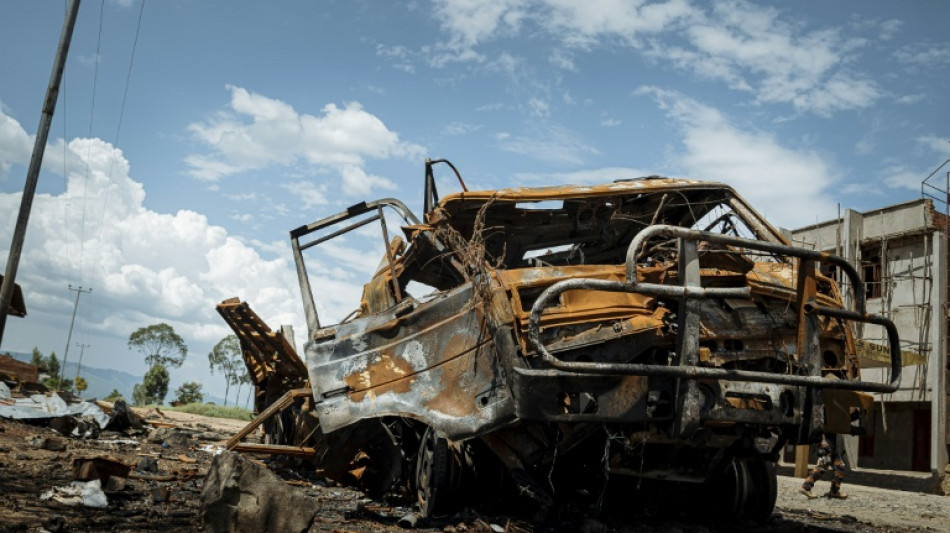
M23 marches on in east DR Congo as US vows action against Rwanda / Photo: Jospin Mwisha - AFP

 London
 22 °C
22 °C

 Manchester
 16 °C
16 °C
 Glasgow
 18 °C
18 °C
 Dublin
16 °C
Dublin
16 °C
 Belfast
15 °C
Belfast
15 °C
 Washington
15 °C
Washington
15 °C
 Denver
20 °C
Denver
20 °C
 Atlanta
24 °C
Atlanta
24 °C
 Dallas
32 °C
Dallas
32 °C
 Houston Texas
32 °C
Houston Texas
32 °C
 New Orleans
32 °C
New Orleans
32 °C
 El Paso
 17 °C
17 °C
 Phoenix
31 °C
Phoenix
31 °C
 Los Angeles
24 °C
San Diego
22 °C
San Francisco
16 °C
Chicago
17 °C
Minneapolis
17 °C
Seattle
14 °C
Portland
14 °C
Salt Lake City
20 °C
Las Vegas
27 °C
Miami
26 °C
Jacksonville
28 °C
San Antonio
31 °C
Bermuda
29 °C
Nassau
19 °C
Iqaluit
9 °C
Yellowknife
9 °C
Anchorage
2 °C
Fairbanks
2 °C
Barrow
-3 °C
Calgary
14 °C
Edmonton
20 °C
Winnipeg
17 °C
Goose Bay
16 °C
Halifax
18 °C
Boston
17 °C
Ottawa
18 °C
Toronto
17 °C
Detroit
17 °C
Cleveland
17 °C
New York
18 °C
Baltimore
Los Angeles
24 °C
San Diego
22 °C
San Francisco
16 °C
Chicago
17 °C
Minneapolis
17 °C
Seattle
14 °C
Portland
14 °C
Salt Lake City
20 °C
Las Vegas
27 °C
Miami
26 °C
Jacksonville
28 °C
San Antonio
31 °C
Bermuda
29 °C
Nassau
19 °C
Iqaluit
9 °C
Yellowknife
9 °C
Anchorage
2 °C
Fairbanks
2 °C
Barrow
-3 °C
Calgary
14 °C
Edmonton
20 °C
Winnipeg
17 °C
Goose Bay
16 °C
Halifax
18 °C
Boston
17 °C
Ottawa
18 °C
Toronto
17 °C
Detroit
17 °C
Cleveland
17 °C
New York
18 °C
Baltimore
 17 °C
Philadelphia
18 °C
Nuuk (Godthåb)
3 °C
Hong Kong
28 °C
Singapore
27 °C
Melbourne
28 °C
Canberra
17 °C
Philadelphia
18 °C
Nuuk (Godthåb)
3 °C
Hong Kong
28 °C
Singapore
27 °C
Melbourne
28 °C
Canberra
 12 °C
Adelaide
16 °C
Darwin
27 °C
Perth
12 °C
Adelaide
16 °C
Darwin
27 °C
Perth
 14 °C
Fort Worth
32 °C
Honolulu
26 °C
Sydney
16 °C
Johannesburg
22 °C
Dubai
14 °C
Fort Worth
32 °C
Honolulu
26 °C
Sydney
16 °C
Johannesburg
22 °C
Dubai
 34 °C
Mumbai
30 °C
Zürich
22 °C
Tokyo
19 °C
Seoul
19 °C
Delhi
30 °C
Beijing
23 °C
Riyadh
38 °C
Prague
16 °C
Pennsylvania
18 °C
Valletta
25 °C
Manama
34 °C
Warsaw
34 °C
Mumbai
30 °C
Zürich
22 °C
Tokyo
19 °C
Seoul
19 °C
Delhi
30 °C
Beijing
23 °C
Riyadh
38 °C
Prague
16 °C
Pennsylvania
18 °C
Valletta
25 °C
Manama
34 °C
Warsaw
 13 °C
Stockholm
13 °C
13 °C
Stockholm
13 °C
The M23 pressed onwards in the eastern Democratic Republic of Congo on Saturday, even as Washington vowed action over its Rwandan backers' violation of a US-brokered peace deal.
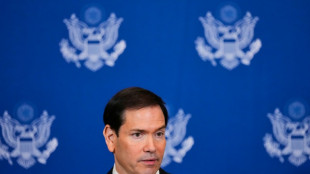
Top US diplomat Marco Rubio said Saturday that Rwanda had clearly breached the agreement it signed with the DRC in Washington last week, the latest attempt to end the grinding three-decade-long conflict upending the mineral-rich Congolese east.
The deal -- hailed by US President Donald Trump as a "miracle" -- was inked on December 4. Just says later, the Rwandan-backed M23 seized the key frontier city of Uvira along the border with Burundi, raising fears of the conflict breaking out into a regional war.
The M23's capture of Uvira -- a city of several hundred thousand people -- allows it to control the land border with Burundi and cut the DRC off from military support from its neighbour.
"Rwanda's actions in eastern DRC are a clear violation of the Washington Accords signed by President Trump, and the United States will take action to ensure promises made to the President are kept," Secretary of State Rubio wrote on X, without elaborating.
Trump has frequently touted the DRC conflict as one of several wars he helped end since returning to the White House.
But after seizing Uvira on Wednesday, the M23 has continued marching westwards, taking the Itombwe sector's administrative centre of Kipupu without resistance on Saturday after the withdrawal of Burundian troops.
With Uvira lying across Lake Tanganyika from its economic capital Bujumbura, Burundi had long feared the Congolese city's fall to the M23, deploying thousands of troops to help the DRC government fight the armed group.
Their takeover of Uvira was part of an offensive launched at the beginning of December in South Kivu province.
It follows its capture earlier this year of Goma and Bukavu, other major cities in the DRC's resource-rich east.
- 'Incalculable consequences' -
South of Kipupu, the M23 was also locked in clashes on Saturday with local militia loyal to the Congolese government on the plateaus overlooking Fizi and Baraka, around 100 kilometres (60 miles) south of Uvira.
Both towns now face the prospect of the M23 joining forces with its allies in the Twirwaneho militia as the armed group continues its advance through South Kivu province.
Several thousand Burundian soldiers were trapped on the plateaus after the M23 took Uvira and were ordered on Wednesday to fall back towards the city of Baraka, according to Burundian military sources. Twirwaneho fighters are harassing the Burundian soldiers as they retreat along the region's poor mountain roads, with no access to ammunition restocks.
The latest armed group's advances came in the wake of stinging criticism on Friday from the US ambassador to the United Nations, Mike Waltz.
He accused Rwanda of "leading the region toward more instability and toward war.
"The Rwandan defence forces have provided materiel, logistics and training support to M23 as well as fighting alongside M23 in DRC with roughly 5,000 to 7,000 troops," not including possible reinforcements during the latest offensive, Waltz told the UN Security Council.
The Rwandan firepower has included surface-to-air missiles, drones and artillery, he added.
- 'Incalculable consequences' -
UN peacekeeping chief Jean-Pierre Lacroix also warned that the M23's advance "has revived the spectre of a regional conflagration with incalculable consequences", and raised the possibility of the Balkanisation of the vast DRC.
"Recent developments pose a serious risk of the progressive fragmentation of the Democratic Republic of Congo, particularly its eastern part," he said.
Since taking up arms again in 2021, the M23 has seized swathes of territory, leading to a spiralling humanitarian crisis.
Earlier this month, UN experts said Rwanda's army and the M23 had carried out summary executions and forced mass displacements of people in the region.
While denying giving the M23 military support, Rwanda argues it faces an existential threat from the presence across the Congolese border of ethnic Hutu militants with links to the 1994 Rwandan genocide of the Tutsis.
E.Spicuzza--INP