UNHCR sounds alarm on funding crisis / Photo: - - AFP

 London
 16 °C
16 °C

 Manchester
16 °C
Manchester
16 °C
 Glasgow
 14 °C
14 °C
 Dublin
19 °C
Dublin
19 °C
 Belfast
16 °C
Belfast
16 °C
 Washington
16 °C
Washington
16 °C
 Denver
 16 °C
16 °C
 Atlanta
16 °C
Atlanta
16 °C
 Dallas
21 °C
Dallas
21 °C
 Houston Texas
26 °C
Houston Texas
26 °C
 New Orleans
21 °C
New Orleans
21 °C
 El Paso
19 °C
El Paso
19 °C
 Phoenix
 22 °C
22 °C
 Los Angeles
15 °C
San Diego
16 °C
San Francisco
11 °C
Chicago
19 °C
Minneapolis
17 °C
Seattle
5 °C
Portland
5 °C
Salt Lake City
14 °C
Las Vegas
17 °C
Miami
Los Angeles
15 °C
San Diego
16 °C
San Francisco
11 °C
Chicago
19 °C
Minneapolis
17 °C
Seattle
5 °C
Portland
5 °C
Salt Lake City
14 °C
Las Vegas
17 °C
Miami
 27 °C
Jacksonville
20 °C
San Antonio
24 °C
Bermuda
27 °C
Nassau
14 °C
Iqaluit
-5 °C
Yellowknife
4 °C
Anchorage
27 °C
Jacksonville
20 °C
San Antonio
24 °C
Bermuda
27 °C
Nassau
14 °C
Iqaluit
-5 °C
Yellowknife
4 °C
Anchorage
 5 °C
Fairbanks
1 °C
Barrow
-2 °C
Calgary
-2 °C
Edmonton
13 °C
Winnipeg
5 °C
Goose Bay
13 °C
Halifax
11 °C
Boston
11 °C
Ottawa
13 °C
Toronto
15 °C
Detroit
15 °C
Cleveland
16 °C
New York
5 °C
Fairbanks
1 °C
Barrow
-2 °C
Calgary
-2 °C
Edmonton
13 °C
Winnipeg
5 °C
Goose Bay
13 °C
Halifax
11 °C
Boston
11 °C
Ottawa
13 °C
Toronto
15 °C
Detroit
15 °C
Cleveland
16 °C
New York
 14 °C
Baltimore
14 °C
Baltimore
 16 °C
Philadelphia
14 °C
Nuuk (Godthåb)
1 °C
Hong Kong
28 °C
Singapore
16 °C
Philadelphia
14 °C
Nuuk (Godthåb)
1 °C
Hong Kong
28 °C
Singapore
 28 °C
Melbourne
23 °C
Canberra
16 °C
Adelaide
12 °C
Darwin
29 °C
Perth
16 °C
Fort Worth
21 °C
Honolulu
24 °C
Sydney
23 °C
Johannesburg
29 °C
Dubai
34 °C
Mumbai
35 °C
Zürich
17 °C
Tokyo
20 °C
Seoul
22 °C
Delhi
29 °C
Beijing
17 °C
Riyadh
35 °C
Prague
13 °C
Pennsylvania
15 °C
Valletta
25 °C
Manama
36 °C
Warsaw
11 °C
Stockholm
8 °C
28 °C
Melbourne
23 °C
Canberra
16 °C
Adelaide
12 °C
Darwin
29 °C
Perth
16 °C
Fort Worth
21 °C
Honolulu
24 °C
Sydney
23 °C
Johannesburg
29 °C
Dubai
34 °C
Mumbai
35 °C
Zürich
17 °C
Tokyo
20 °C
Seoul
22 °C
Delhi
29 °C
Beijing
17 °C
Riyadh
35 °C
Prague
13 °C
Pennsylvania
15 °C
Valletta
25 °C
Manama
36 °C
Warsaw
11 °C
Stockholm
8 °C
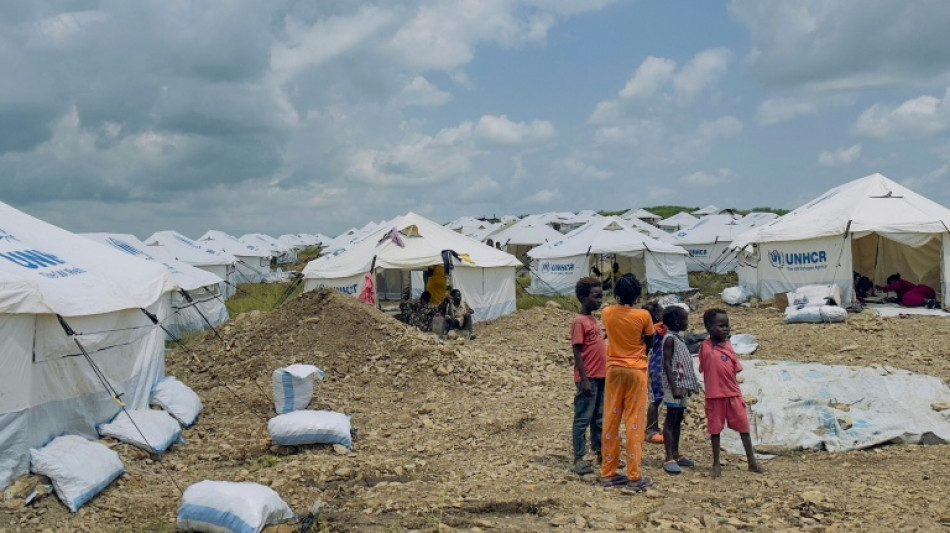
The UN refugees chief warned Monday about being "asked to do the impossible", with his agency over-stretched by a huge funding shortfall and heavy displacement.
Barham Salih, the United Nations' high commissioner for refugees, said the UNHCR had slashed its workforce due to budget cuts, while the number of forcibly displaced people remains near record highs.
"We are asking more of the refugee response at precisely the moment when fewer resources are available to sustain it," he said.
"As of October 9, we have funds available of $3 billion, representing 35 percent of the requirement of the $8.5 billion needed for 2026."
The UNHCR is currently forecasting funding of approximately $2.68 billion for 2027.
"I recognise the budget pressures governments face," he said, "but there is again a difference between doing more with less and being asked to do the impossible.
"We cannot ask organisations, struggling to survive, to keep millions of others alive."
Salih said that UNHCR has responded to 22 emergency declarations in 18 countries this year -- including 17 newly-declared emergencies in 15 countries.
The former Iraqi president -- himself a one time refugee -- spelled out the bleak situation while opening UNHCR's annual executive committee meeting, which runs until Friday.
He said that since 2024, nearly 8,000 people had left UNHCR, with its workforce falling from nearly 20,000 to just under 12,000.
The expertise that has left the agency cannot be easily replaced, he said.
- Hereditary displacement -
Some 117.8 million people worldwide were forcibly displaced from their homes at the end of 2025, according to UNHCR -- down slightly from 2024's record 123.2 million.
Of those 117.8 million, 35.6 million were refugees under UNHCR's mandate, with two-thirds coming from Venezuela, Ukraine, Syria, Afghanistan and Sudan.
The United States -- traditionally the world's top donor -- has slashed foreign aid under President Donald Trump, while other major donors have tightened their belts.
Of the $2.44 billion received in voluntary contributions in 2026, the UNHCR's top donor was the European Union at $408 million, followed by Germany, Sweden, the Netherlands and Denmark as the biggest contributing countries.
The United States was the ninth-biggest contributor with $89 million -- down from $812 million last year.
China donated $1.8 million -- slightly less than private donors in the Philippines.
Salih said that too often, what begins as a temporary solution for refugees becomes permanent, with children born in displacement settlements becoming adults there with children of their own.
"We must work toward a future where one generation of refugees is not forced to pass its displacement to the next," he said.
T.Cusumano--INP