Vast aid challenge after 'Himalayan tsunami' devastates Nepal / Photo: Arun SANKAR - AFP

 London
 23 °C
23 °C

 Manchester
21 °C
Manchester
21 °C
 Glasgow
18 °C
Glasgow
18 °C
 Dublin
19 °C
Dublin
19 °C
 Belfast
18 °C
Belfast
18 °C
 Washington
23 °C
Washington
23 °C
 Denver
 17 °C
17 °C
 Atlanta
 24 °C
24 °C
 Dallas
26 °C
Dallas
26 °C
 Houston Texas
28 °C
Houston Texas
28 °C
 New Orleans
25 °C
New Orleans
25 °C
 El Paso
 26 °C
26 °C
 Phoenix
30 °C
Phoenix
30 °C
 Los Angeles
19 °C
San Diego
18 °C
San Francisco
16 °C
Chicago
27 °C
Minneapolis
23 °C
Seattle
13 °C
Portland
13 °C
Salt Lake City
16 °C
Las Vegas
26 °C
Miami
26 °C
Jacksonville
26 °C
San Antonio
27 °C
Bermuda
28 °C
Nassau
21 °C
Iqaluit
7 °C
Yellowknife
16 °C
Anchorage
8 °C
Fairbanks
1 °C
Barrow
0 °C
Calgary
14 °C
Edmonton
22 °C
Winnipeg
15 °C
Goose Bay
21 °C
Halifax
18 °C
Boston
Los Angeles
19 °C
San Diego
18 °C
San Francisco
16 °C
Chicago
27 °C
Minneapolis
23 °C
Seattle
13 °C
Portland
13 °C
Salt Lake City
16 °C
Las Vegas
26 °C
Miami
26 °C
Jacksonville
26 °C
San Antonio
27 °C
Bermuda
28 °C
Nassau
21 °C
Iqaluit
7 °C
Yellowknife
16 °C
Anchorage
8 °C
Fairbanks
1 °C
Barrow
0 °C
Calgary
14 °C
Edmonton
22 °C
Winnipeg
15 °C
Goose Bay
21 °C
Halifax
18 °C
Boston
 18 °C
Ottawa
19 °C
Toronto
18 °C
Ottawa
19 °C
Toronto
 19 °C
Detroit
22 °C
Cleveland
21 °C
New York
21 °C
Baltimore
24 °C
Philadelphia
22 °C
Nuuk (Godthåb)
5 °C
Hong Kong
29 °C
Singapore
32 °C
Melbourne
27 °C
Canberra
10 °C
Adelaide
13 °C
Darwin
27 °C
Perth
19 °C
Detroit
22 °C
Cleveland
21 °C
New York
21 °C
Baltimore
24 °C
Philadelphia
22 °C
Nuuk (Godthåb)
5 °C
Hong Kong
29 °C
Singapore
32 °C
Melbourne
27 °C
Canberra
10 °C
Adelaide
13 °C
Darwin
27 °C
Perth
 16 °C
Fort Worth
25 °C
Honolulu
26 °C
Sydney
18 °C
Johannesburg
24 °C
Dubai
40 °C
Mumbai
30 °C
Zürich
16 °C
Fort Worth
25 °C
Honolulu
26 °C
Sydney
18 °C
Johannesburg
24 °C
Dubai
40 °C
Mumbai
30 °C
Zürich
 25 °C
Tokyo
26 °C
Seoul
27 °C
Delhi
34 °C
Beijing
25 °C
Riyadh
40 °C
Prague
22 °C
Pennsylvania
21 °C
Valletta
34 °C
Manama
39 °C
Warsaw
23 °C
Stockholm
17 °C
25 °C
Tokyo
26 °C
Seoul
27 °C
Delhi
34 °C
Beijing
25 °C
Riyadh
40 °C
Prague
22 °C
Pennsylvania
21 °C
Valletta
34 °C
Manama
39 °C
Warsaw
23 °C
Stockholm
17 °C
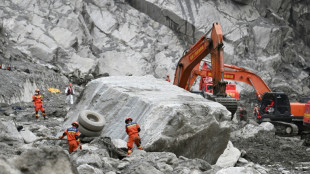
The United Nations warned Thursday of the immense challenge of reaching Nepal flood survivors, with destroyed roads forcing aid workers to consider using cargo drones and porters to reach isolated Himalayan communities.
More than 1,200 people have been killed and nearly 5,000 are missing on both sides of the China-Nepal border since the catastrophic glacial mountain collapse on August 26, according to tolls by both nations on Thursday.
"It is just incredible -- the magnitude of the disaster, the magnitude of the destruction," UN Resident Coordinator Lila Pieters Yahia told reporters in Kathmandu.
The search for the missing continues.
More than 800 foreigners from at least 34 countries are among those missing, including tourists and pilgrims, in both Nepal and Tibet in China.
In Kathmandu, families of some of the missing foreigners said they were combing hospitals and morgues for any information.
"I feel desperate, it's been so many days," said 53-year-old US citizen Sanjeev Rai who flew to Nepal to look for his wife, one of around 75 Americans missing.
In China, photographs of missing people are shared on social media by relatives hoping for news.
"Hurry up and come back, your parents miss you a lot, we need you," one woman wrote on a popular platform, posting an image of her relative, a police officer, and his wife.
Beijing keeps tight control over media access and information, and foreign journalists are restricted from reporting in Tibet.
- 'Very, very difficult' -
Floods tore through mountain districts, and destroyed roads, bridges and and hydropower dams.
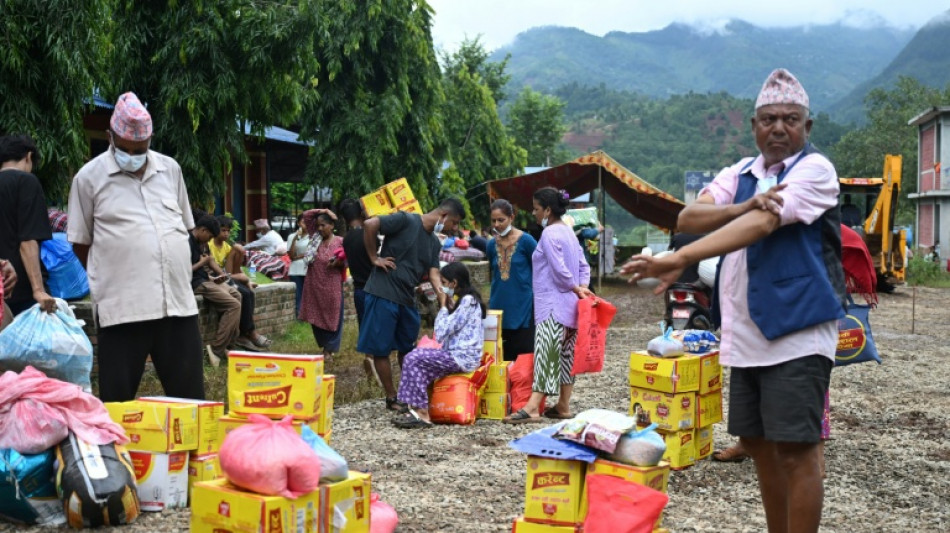
Communities near the epicentre remain cut off, with the UN working alongside Nepal's government to get emergency supplies into devastated areas.
"Access has been very, very, very difficult," Pieters Yahia said, noting that UN agencies had delivered water and and sanitation kits, as well as food and medicine.
"Those are the most essential, particularly for the people who are in the epicentre."
Foreign Minister Shisir Khanal, in a briefing to diplomats in Kathmandu on Thursday, called it a "Himalayan tsunami".
"I can say from first-hand observation that the reality on the ground is far more severe than images can convey," he said. "This is not an ordinary flood".
Foreign ministry spokesman Lok Bahadur Poudel Chhetri said Nepal needed specialised international assistance, including heavy-lift drones and temporary bridges, as well as body bags and DNA testing kits to help identify the dead.
He said Nepal also needed a mobile air traffic control system and broadband seismometers to monitor ground vibrations.
More than 21,000 Nepali security personnel are working on search, rescue and relief operations.
Nepali rescuers, aided by experts from India, China and South Korea, continue searching for survivors feared trapped inside hydropower tunnels, but teams have repeatedly hit dead ends, and no one has been confirmed alive.
"We've been discussing with the government how also to use helicopters and cargo drones to be able to deliver aid," Pieters Yahia told reporters.
- Monitoring and data sharing -
The UN may also turn to Nepal's porters, accustomed to carrying heavy loads through some of the world's toughest mountain terrain during trekking and climbing expeditions.
"The beauty of your country is you have porters," the resident coordinator added, saying the UN may also use "those very simple means to bring the aid as soon as possible".
Pieters Yahia warned that gaps in assistance were inevitable given the scale of the catastrophe.
"The magnitude of the disaster is so big that there will be always gaps," she said.
The disaster highlights the need for better long-term monitoring, data sharing and coordination across the Himalayas, experts say.
"What we really need is a dedicated mechanism... which works around the clock," Saswata Sanyal with the Kathmandu-based International Centre for Integrated Mountain Development told AFP.
Nepal's disaster authority said Thursday that the number of bodies recovered was 1,252, with 4,216 people missing. In China, state media say 21 people had bene killed, and 541 people are missing.
That takes the overall toll to 1,273 people, with at least 4,757 people missing.
I.Altadonna--INP