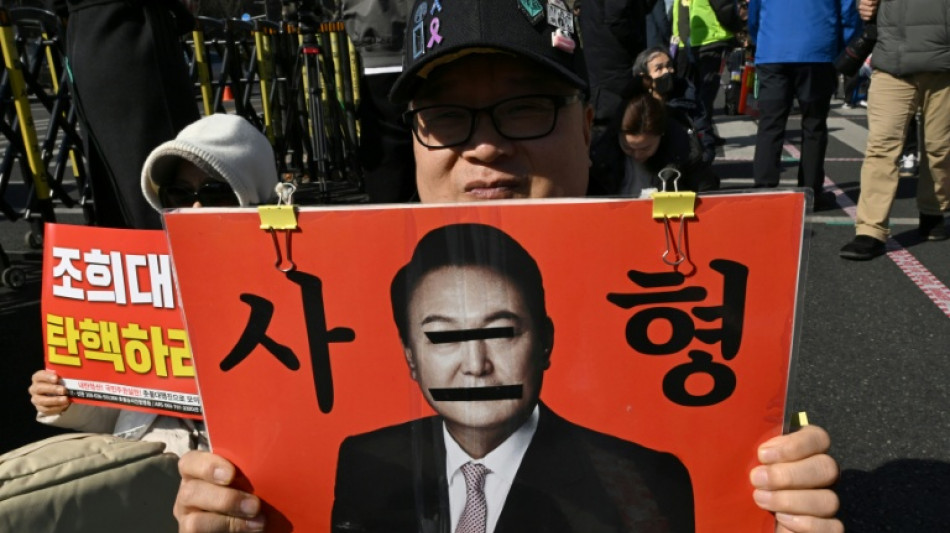
Ex-South Korea leader Yoon gets life in prison for insurrection / Photo: Jung Yeon-je - AFP

 London
 28 °C
28 °C
 Manchester
25 °C
Manchester
25 °C
 Glasgow
 24 °C
24 °C
 Dublin
 19 °C
19 °C
 Belfast
18 °C
Belfast
18 °C
 Washington
27 °C
Washington
27 °C
 Denver
29 °C
Denver
29 °C
 Atlanta
28 °C
Atlanta
28 °C
 Dallas
 30 °C
30 °C
 Houston Texas
32 °C
Houston Texas
32 °C
 New Orleans
27 °C
New Orleans
27 °C
 El Paso
 26 °C
26 °C
 Phoenix
37 °C
Phoenix
37 °C
 Los Angeles
23 °C
San Diego
22 °C
San Francisco
16 °C
Chicago
22 °C
Minneapolis
24 °C
Seattle
15 °C
Portland
16 °C
Salt Lake City
30 °C
Las Vegas
35 °C
Miami
31 °C
Jacksonville
29 °C
San Antonio
31 °C
Bermuda
29 °C
Nassau
26 °C
Iqaluit
11 °C
Yellowknife
11 °C
Anchorage
12 °C
Fairbanks
13 °C
Barrow
2 °C
Calgary
16 °C
Edmonton
23 °C
Winnipeg
26 °C
Goose Bay
23 °C
Halifax
27 °C
Boston
27 °C
Ottawa
22 °C
Toronto
21 °C
Detroit
21 °C
Cleveland
24 °C
New York
27 °C
Baltimore
27 °C
Philadelphia
29 °C
Nuuk (Godthåb)
8 °C
Hong Kong
Los Angeles
23 °C
San Diego
22 °C
San Francisco
16 °C
Chicago
22 °C
Minneapolis
24 °C
Seattle
15 °C
Portland
16 °C
Salt Lake City
30 °C
Las Vegas
35 °C
Miami
31 °C
Jacksonville
29 °C
San Antonio
31 °C
Bermuda
29 °C
Nassau
26 °C
Iqaluit
11 °C
Yellowknife
11 °C
Anchorage
12 °C
Fairbanks
13 °C
Barrow
2 °C
Calgary
16 °C
Edmonton
23 °C
Winnipeg
26 °C
Goose Bay
23 °C
Halifax
27 °C
Boston
27 °C
Ottawa
22 °C
Toronto
21 °C
Detroit
21 °C
Cleveland
24 °C
New York
27 °C
Baltimore
27 °C
Philadelphia
29 °C
Nuuk (Godthåb)
8 °C
Hong Kong
 25 °C
Singapore
25 °C
Singapore
 29 °C
Melbourne
27 °C
Canberra
29 °C
Melbourne
27 °C
Canberra
 3 °C
Adelaide
11 °C
Darwin
22 °C
Perth
11 °C
Fort Worth
29 °C
Honolulu
3 °C
Adelaide
11 °C
Darwin
22 °C
Perth
11 °C
Fort Worth
29 °C
Honolulu
 24 °C
Sydney
10 °C
Johannesburg
17 °C
Dubai
34 °C
Mumbai
28 °C
Zürich
32 °C
Tokyo
25 °C
Seoul
28 °C
Delhi
34 °C
Beijing
32 °C
Riyadh
44 °C
Prague
28 °C
Pennsylvania
25 °C
Valletta
30 °C
Manama
35 °C
Warsaw
26 °C
Stockholm
21 °C
24 °C
Sydney
10 °C
Johannesburg
17 °C
Dubai
34 °C
Mumbai
28 °C
Zürich
32 °C
Tokyo
25 °C
Seoul
28 °C
Delhi
34 °C
Beijing
32 °C
Riyadh
44 °C
Prague
28 °C
Pennsylvania
25 °C
Valletta
30 °C
Manama
35 °C
Warsaw
26 °C
Stockholm
21 °C
A South Korean court declared former president Yoon Suk Yeol's martial law bid in 2024 an insurrection, sentencing the disgraced leader to life in prison on Thursday.
Yoon abruptly declared martial law in a televised address in December 2024, saying drastic measures were needed to root out "anti-state forces".
Although Yoon's bid to impose military rule lasted just six hours, it triggered widespread panic in a nation seen as a beacon of democracy in Asia.
The Seoul Central District Court found Yoon guilty of leading an insurrection, designed to "paralyse" his many critics in the National Assembly.
"The declaration of martial law resulted in enormous social costs, and it is difficult to find any indication that the defendant has expressed remorse for that," presiding judge Ji Gwi-yeon said.
Prosecutors had sought the harshest penalty for Yoon's insurrection charges, urging the court to sentence him to death.
South Korea has an unofficial moratorium on capital punishment, with the last death row prisoners executed in 1997.
Yoon was a deeply unpopular president at the time of the martial law crisis.
His party was vastly outmuscled in parliament, which had voted to block budget measures and impeach key figures in his administration.
With support from senior military figures, Yoon dispatched troops to seize control of the assembly building and arrest critics.
The judge said that Yoon "became fixated" on his belief that the opposition "could effectively neutralise the president".
- 'Expected death penalty' -
Yoon will be jailed in South Korea's chronically over-crowded prison system.
It is a far cry from the lavish life he enjoyed during his rapid ascent from star prosecutor to president.
It was not clear when 65-year-old Yoon would be eligible for parole, although most inmates serving life terms can typically apply after 20 years.
The former president's lawyer Yoon Gap-geun argued that the verdict appeared to be a "pre-determined conclusion set by the prosecutors", telling reports an appeal may not be worth pursuing.
To be able to appeal, Yoon must submit a notice within seven days.
Under South Korean law, only two sentences are fit for insurrection: life imprisonment or death.
Five other ex-officials were also sentenced on Thursday for crimes linked to the martial law crisis.
Former defence minister Kim Yong-hyun was sentenced to 30 years in prison, while former general Noh Sang-won was handed an 18-year term.
Outside the court, thousands of supporters rallied for Yoon, toting placards that read "Yoon Great Again" and "Drop the charge".
At a counter-protest, anti-Yoon demonstrators expressed their dismay, arguing the former leader had gotten off lightly.
"We, of course, expected the death penalty, so we are very disappointed that a life sentence was handed down," said protester Lim Choon-hee, 60.
Jung won-chul, a former marine, said it was "deeply disappointing that someone who should have received an extremely severe punishment for attempting to overthrow the democratic system of the Republic of Korea was instead given life imprisonment".
- 'Lust for power' -
Yoon has argued that he acted to "safeguard freedom" and restore constitutional order against what he called an opposition-led "legislative dictatorship".
The failed insurrection stirred unpleasant memories of the military coups that jolted the nation between 1960 and 1980.
Yoon has already been sentenced to five years in prison on lesser charges.
He broke into late-night TV on December 3, 2024, to deliver a shock address to the nation.
Pointing to vague threats of North Korean influence and dangerous "anti-state forces", he declared the suspension of civilian government and the start of military rule.
Martial law was lifted six hours later, after lawmakers raced to the assembly building to hold an emergency vote.
Staffers barricaded the doors with office furniture to keep armed troops at bay.
The declaration triggered flash protests, sent the stock market into panic and caught key military allies such as the United States off guard.
M.Vacanti--INP